What Size Food Processor Do I Need?
For most home cooks, a 9-cup to 11-cup food processor hits the sweet spot: big enough to shred a block of cheese or slice a full onion in one pass, small enough to store without hassle. Singles or couples who mainly mince garlic, make small amounts of hummus, or chop herbs can get by with a 3-cup to 5-cup mini. Households of four or more, or anyone who bakes bread dough regularly, should look at 12-cup to 14-cup models.

How Bowl Capacity Is Measured
Manufacturers list capacity in cups, but that number reflects the total bowl volume, not the usable fill level. In practice you should fill a food processor bowl no more than two-thirds full to prevent leaks and uneven chopping. A 14-cup bowl, for example, works comfortably with about 9 cups of ingredients at a time. Ounces appear on some spec sheets: 32 oz equals 4 cups, 64 oz equals 8 cups, and 112 oz equals 14 cups. When comparing models, convert to cups so the numbers make intuitive sense.
Mini Food Processors: 3 to 5 Cups
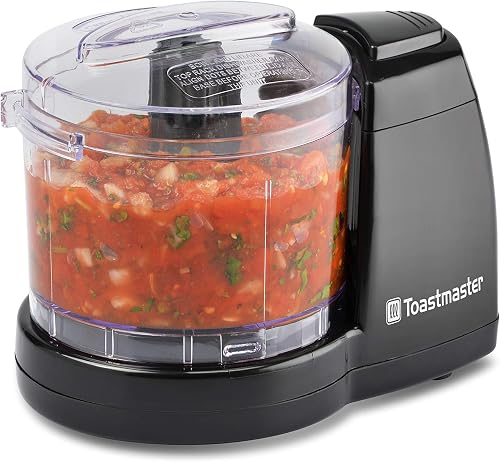
Mini processors are best for single-ingredient jobs: mincing garlic or ginger, chopping a handful of nuts, blending a small batch of salad dressing. The Toastmaster TM-61MC, for instance, carries a 12 oz (roughly 1.5-cup) bowl and weighs just 1.2 lb, which makes it easy to pull out and wash without any commitment. At $23.99 with 1,500 reviews and a 4.4-star rating, it shows that a small processor can satisfy a lot of buyers. The downside is that you have to work in batches for anything beyond a cup or two, which gets tedious fast if cooking is your main hobby.
Mid-Size Food Processors: 7 to 11 Cups
This range is the most versatile for everyday cooking. A 7-cup to 11-cup machine handles a full bag of carrots, a block of cheese, pie dough for a double-crust, or a batch of salsa without requiring you to stop and empty the bowl mid-task. These models also tend to be lighter and more compact than full-size units, which matters if your counter space is limited. Mid-size processors are the right starting point for households of two to four people who cook from scratch three or more nights a week.
Full-Size Food Processors: 12 to 14 Cups
A 14-cup processor is the right tool when you regularly cook in volume: Thanksgiving prep, weekly meal prep for a family of five, catering for a party, or any recipe that calls for several pounds of vegetables at once. The Cuisinart DFP-14BCNY offers a 112 oz (14-cup) bowl paired with a 720 W motor and has earned 22,203 reviews at a 4.6-star rating, priced at $250.57. That review volume reflects how widely it is used as a workhorse kitchen machine. The trade-off is footprint: at 11 x 7.9 x 14.8 inches and 18 lb, it needs a dedicated spot on the counter or a lower cabinet shelf you can reach easily.
Matching Size to Household and Cooking Style
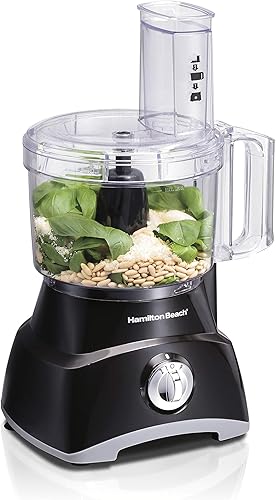
A single person who cooks simple weeknight meals rarely needs more than a 5-cup machine. A couple who bakes and meal-preps will find a 9-cup model the practical ceiling before they hit diminishing returns. Families of four or more who make soups, slaws, and bread dough benefit from 11 cups or larger. The Hamilton Beach 70740 lands at 64 oz (8 cups) with a 450 W motor, 2 speeds, and stainless steel blades, rated 4.5 stars across 18,300 reviews at $62.29 -- a strong sign it satisfies a wide range of mid-size cooking needs at an accessible price. Use household size as your baseline, then add one size category if you entertain guests more than once a month.
Counter Space and Storage Reality Check
Bowl capacity is only half the equation. A tall 14-cup machine may not fit under standard upper cabinets, so measure the clearance between your counter and the bottom of your cabinets before ordering. Mid-size processors typically stand 12 to 14 inches tall; full-size models can reach 16 inches or more with the bowl and lid assembled. If storage is tight, a wide, low-profile design matters as much as cup count. Weigh the machine too: anything over 15 lb is unlikely to move in and out of a cabinet daily, so plan for a permanent counter spot if you go large.
Common mistakes to avoid
- Buying the largest size available without considering how often you actually cook for a crowd, which leads to a machine that sits unused most of the week.
- Filling the bowl all the way to the rated capacity, which causes leaks, uneven results, and sometimes overloaded motors.
- Choosing a mini processor to save counter space and then getting frustrated having to process ingredients in three or four small batches for every recipe.
- Ignoring the height of the assembled unit and discovering it does not clear the upper cabinets after it arrives.
- Assuming a bigger bowl means more power, when wattage and bowl size are independent specs that vary widely across brands.
- Overlooking the weight of a full-size model and realizing it is too heavy to store in a cabinet, forcing a permanent counter placement you did not plan for.
Frequently asked questions
Is a 7-cup food processor big enough for most recipes?
For households of one to three people, a 7-cup machine handles the majority of everyday tasks: chopping vegetables, making hummus, shredding cheese, or mixing a small batch of dough. You will need to work in two passes for large soups or when processing several pounds of produce at once, but for standard weeknight cooking it is rarely a limiting factor.
Can I use a food processor that is too large for a small job?
Yes, but with a catch. When the ingredient volume is much smaller than the bowl, the blade may not reach the food properly and you get uneven results, with some pieces finely chopped and others barely touched. Most full-size processors include a smaller inner bowl or a mini bowl attachment for exactly this reason, so check whether that accessory is included before assuming a large machine covers all tasks.
What size food processor do I need for bread dough?
Dough is dense and puts more strain on a motor than chopping or slicing. For a standard two-loaf batch of bread dough, you need at least an 11-cup bowl and a motor rated at 600 W or higher. Going smaller risks both overflow and motor burnout over time. If baking is a regular part of your routine, a 14-cup machine with a dough blade is the safer long-term investment.
How do ounces on the spec sheet translate to cups?
Divide the ounce figure by 8 to get cups: 32 oz is 4 cups, 64 oz is 8 cups, and 112 oz is 14 cups. Keep in mind that usable capacity is roughly two-thirds of the listed number, so a 64 oz bowl works comfortably with about 5 to 5.5 cups of ingredients at a time.
Is a mini food processor worth buying if I already have a full-size one?
For quick single-ingredient tasks like mincing two cloves of garlic or blending a vinaigrette, a mini processor is genuinely faster than breaking out and washing a large machine. If you find yourself reaching for a knife instead of your full-size processor for small jobs, a mini is a practical complement. It is a convenience purchase rather than a replacement, so it makes sense mainly if counter or storage space allows for both.