Food Processor vs Stand Mixer: Which One Should You Buy?
A food processor handles chopping, slicing, shredding, pureeing, and dough mixing across a wide range of tasks. A stand mixer is purpose-built for beating, whipping, and kneading, and it does those jobs better than any food processor can. Buy a food processor if you cook savory food most of the time; buy a stand mixer if you bake regularly and want consistent dough and batter results.

What a Food Processor Actually Does
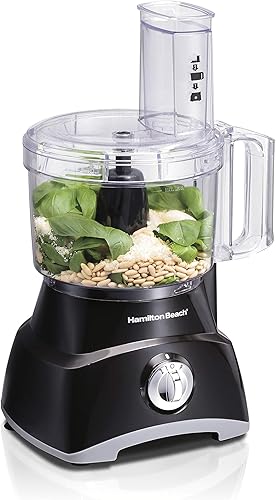
A food processor spins sharp blades and interchangeable discs to chop vegetables, shred cheese, slice cabbage, grind nuts, puree soups, and mix pastry dough in seconds. The work bowl sits on a motorized base, and most models include at least a chopping blade and one or two shredding or slicing discs. The Hamilton Beach 70740, rated 4.5 stars across 18,300 reviews and priced around $62, pairs a 450W motor with a 64 oz bowl, giving you room to prep a full batch of coleslaw or a double recipe of hummus without stopping to empty the bowl. Speed settings are usually simple, often just high, low, and pulse, because the real control comes from how long you run the machine. That makes a food processor fast to learn and fast to use on weekday nights.
What a Stand Mixer Actually Does
A stand mixer uses a rotating head with attachments that move through the bowl in a planetary pattern, meaning the attachment reaches every part of the bowl without you touching it. The three standard attachments on most models are a flat beater for cake batter and cookie dough, a wire whip for egg whites and cream, and a dough hook for bread and pizza dough. Stand mixers are heavier machines, often 20 to 25 pounds, and they stay on the counter because moving them frequently is inconvenient. They are not designed for chopping or slicing, and feeding solid vegetables into a stand mixer would damage it. The value is in hands-free mixing: you set the speed, walk away, and come back to properly developed dough or stiff peaks.
Where They Overlap and Where They Do Not
Both machines can mix dough, but they do it differently. A food processor mixes pastry and pie dough quickly and with less gluten development, which is exactly what you want for a flaky crust. A stand mixer kneads yeast doughs thoroughly over 8 to 10 minutes, building the gluten structure that gives bread its chew. For cookie dough, a stand mixer gives better results because it creams butter and sugar more evenly. A food processor can technically mix cookies but tends to overmix. Beyond dough, there is almost no overlap: chopping an onion in a stand mixer is not possible, and whipping egg whites in a food processor produces foam but not the stable stiff peaks you need for a meringue.
Comparing Capacity and Footprint
Food processors range widely in bowl size, from compact 12 oz personal choppers to full-size 112 oz models like the Cuisinart DFP-14BCNY, which runs 720W, holds 112 oz, and has earned 4.6 stars from over 22,000 reviewers at around $251. A mid-size 64 oz bowl handles most family cooking tasks. Stand mixer bowls are typically 4.5 to 7 quarts (144 to 224 oz), which sounds larger but is used for batters and doughs, not prep. Footprint-wise, both machines claim roughly the same counter space, but a stand mixer is taller and heavier. If your counter space is limited, a food processor stores more easily because many models allow you to nest the bowl and lid inside each other.
Price Ranges and Value
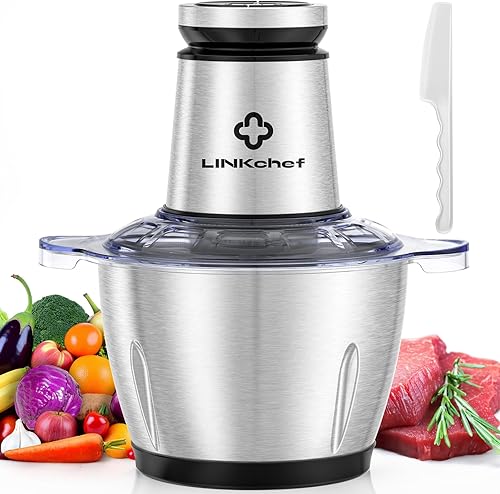
Food processors start below $25 for small mini choppers and climb past $250 for full-size models with multiple disc attachments. The sweet spot for most home cooks is the $50 to $80 range, where you get a reliable motor, a bowl large enough for real cooking, and stainless steel blades. The LINKChef FC7048, for example, is priced around $55 with a 600W motor, a 64 oz bowl, and stainless steel blades, and it holds a 4.6 star rating across 4,600 reviews. Stand mixers start around $100 for basic tilt-head models but the most popular units land between $300 and $500. If you bake less than once a week, that price is hard to justify. If you bake frequently, the stand mixer pays for itself in time saved and in results that are genuinely difficult to replicate by hand.
Which One to Buy First
If you are choosing between the two and can only buy one, start with a food processor. It covers more daily cooking tasks: chopping, slicing, shredding, and pureeing all have no real substitute, while many stand mixer jobs can be done by hand or with a hand mixer. Add a stand mixer when you find yourself baking bread or cakes multiple times a week and spending significant time kneading or beating by hand. If you already own a hand mixer and bake regularly, a stand mixer becomes the better first purchase. The two machines complement each other rather than compete directly, so owning both eventually makes sense for cooks who bake and cook savory meals with equal frequency.
Common mistakes to avoid
- Buying a stand mixer hoping it will replace a food processor for chopping and slicing. It cannot do either task.
- Buying a food processor expecting it to whip egg whites to stiff peaks. A food processor can aerate eggs but will not produce stable meringue-quality peaks.
- Choosing a food processor with too small a bowl. A 12 oz mini chopper is useful for garlic and herbs but too small for shredding a head of cabbage or making a full batch of salsa.
- Overfilling the food processor bowl with liquid. Most bowls are not watertight above the blade assembly, so soups and purees should be processed in batches.
- Running yeast dough in a food processor for more than 30 to 45 seconds. Over-processing heats the dough from friction and can kill the yeast.
- Assuming a stand mixer attachment turns the machine into a food processor. Grinder and slicer attachments exist for some stand mixer brands, but their capacity and speed are lower than a dedicated food processor.
Frequently asked questions
Can a food processor replace a stand mixer for bread dough?
A food processor can mix and briefly knead yeast dough, and some bakers prefer it for no-knead or quick dough recipes because it is fast. However, it cannot replicate the extended kneading a stand mixer provides over 8 to 10 minutes, and the friction from a food processor motor can warm dough unevenly. For occasional bread baking, a food processor works as a substitute. For regular bread baking, a stand mixer gives more consistent results.
Can a stand mixer chop vegetables?
No. Stand mixers are designed to mix, beat, whip, and knead soft ingredients placed in the bowl. There is no blade or mechanism to chop solid vegetables, and attempting it would damage the attachment and potentially the machine. Chopping, slicing, and shredding vegetables requires a food processor with the appropriate disc or blade.
Is a food processor worth buying if I already have a blender?
Yes, for most cooks. A blender handles liquid-heavy tasks like smoothies, soups, and sauces well, but it struggles with dry chopping, shredding, and slicing tasks that require control over texture. A food processor lets you dice onions, shred carrots, slice cucumbers, make pastry dough, and grind nuts without adding liquid, which a blender needs to function properly. The two appliances serve different purposes and most cooks find value in both.
What size food processor is best for a family of four?
A bowl in the 64 to 80 oz range handles most family-size cooking tasks without requiring multiple batches. That covers shredding a full bag of carrots, making a large batch of salsa, or processing a double recipe of pie dough. Larger bowls above 96 oz are useful if you regularly cook for larger groups or do a lot of batch cooking on weekends.
Can I use a food processor to make whipped cream?
A food processor can whip heavy cream to a soft, thickened state, but it is difficult to get stable stiff peaks because the blade aerates unevenly and can over-process the cream into butter quickly. A stand mixer with the wire whip attachment, or even a hand mixer, is much better suited for whipped cream. Use the food processor for this only if it is the only option available.