Best Citrus Juicers of 2026
A good citrus juicer does one thing well: it extracts juice cleanly, quickly and without making a mess. Whether you squeeze a single orange every morning or run through bags of citrus for batch lemonade, the right machine makes the job feel effortless. The options range from compact manual reamers under $20 to powerful electric models built for daily use at $150 and up. After sorting through the full lineup by buyer demand, verified ratings and price-to-spec value, ten models stand out as genuinely worth buying in 2026. Two products were flagged as ones to skip based on low ratings or insufficient buyer history to trust.
Short answer: The Eurolux DEYS-JS-1127-093 (B0888RNWXZ, $159.99) is the top overall pick thanks to the strongest real-world demand signal in this category, a 4.2 rating across 775 reviews and a 300 W die-cast build that handles high-volume juicing. For the best value under $15, the Elite Gourmet ETS623 (B0CK9HJ7S2, $13.99) is hard to argue with: 6,897 reviews and a 4.5 rating make it the most-reviewed citrus juicer on this list at any price.
Compare every pick
-
1 Eurolux DEYS-JS-1127-093 Citrus Juicer $159.99
- Type
- Citrus Juicer
- Power
- 300 W
- Jar / Bowl Capacity
- -
-
2 Luukmonde D-8020A Citrus Juicer $23.99
- Type
- Citrus Juicer
- Power
- -
- Jar / Bowl Capacity
- 40.6 oz
-
3 Elite Gourmet ETS623 Citrus Juicer $13.99
- Type
- Citrus Juicer
- Power
- 40 W
- Jar / Bowl Capacity
- -
-
4 Elite Gourmet ETS740 Citrus Juicer $16.12
- Type
- Citrus Juicer
- Power
- 40 W
- Jar / Bowl Capacity
- 40.6 oz
-
5 Boss 8962 Citrus Juicer $28.12
- Type
- Citrus Juicer
- Power
- 150 W
- Jar / Bowl Capacity
- 40.0 oz
-
6 Cuisinart CCJ-500C Citrus Juicer $52.02
- Type
- Citrus Juicer
- Power
- -
- Jar / Bowl Capacity
- -
-
7 Chef'n 5284627 Citrus Juicer $18.07
- Type
- Citrus Juicer
- Power
- 150 W
- Jar / Bowl Capacity
- 16.9 oz
-
8 Dominion DCJ240 Citrus Juicer $16.99
- Type
- Citrus Juicer
- Power
- 40 W
- Jar / Bowl Capacity
- -
-
9 Hamilton Beach 66333 Citrus Juicer $39.70
- Type
- Citrus Juicer
- Power
- -
- Jar / Bowl Capacity
- -
-
10 Waring BJ120C Citrus Juicer $337.99
- Type
- Citrus Juicer
- Power
- 150 W
- Jar / Bowl Capacity
- 32.0 oz
Best Citrus Juicers of 2026, ranked
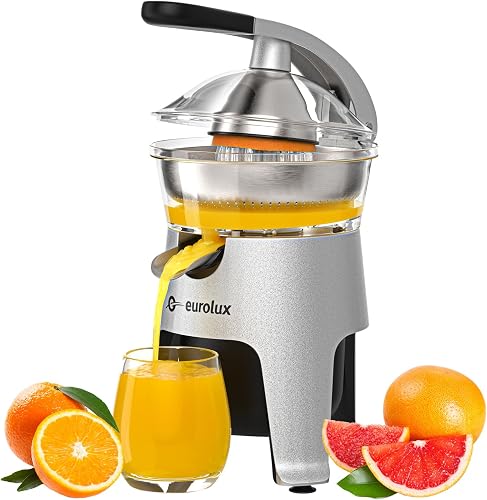
- Power 300 W
- Jar / bowl material Die Cast
- Blade material Stainless Steel
- Finish Die Cast
- Color Die Cast
- Dimensions 7.87 X 7.87 X 13.39 In
The Eurolux DEYS-JS-1127-093 earns the top spot with the strongest demand signal in this category: 300 bought last month, 775 reviews and a 4.2 rating. At $159.99 it is the most serious home-focused citrus juicer on this list, with a 300 W motor, stainless steel blades and a die-cast body measuring 7.87 by 7.87 by 13.39 inches. That build quality explains why buyers consistently choose it over cheaper options when volume and durability matter.
Best for: Daily high-volume juicing, households that go through citrus regularly and buyers who have outgrown cheaper plastic models
Pros
- Highest real-world demand in the category with 300 bought last month
- 300 W motor handles firm oranges and large grapefruits with ease
- Die-cast construction reduces vibration and feels solid on the counter
- Stainless steel blades resist citrus acid staining over time
- 775 verified reviews provide a reliable picture of long-term performance
Cons
- At $159.99 it is a significant step up from budget alternatives
- Larger footprint at 7.87 by 7.87 by 13.39 inches requires dedicated counter space
Bottom line: The most trusted citrus juicer in active daily use in this lineup. The demand numbers back the price.
Check price on Amazon Read the full review →
- Jar / bowl capacity 40.6 oz
- Blade material Polypropylene
- Finish Brushed
- Color Black
- Dimensions 6.3 X 7.87 X 9.06 In
- Weight 2.2 lb
The Luukmonde D-8020A has the largest review base of any citrus juicer on this list at 7,900 ratings with a 4.4 average, all at $23.99. The 40.6 oz pitcher is among the largest in the category, the unit weighs just 2.2 lb at 6.3 by 7.87 by 9.06 inches and the polypropylene reamer runs on 120 V AC. That combination of huge review confidence, large capacity and easy portability at a budget price is genuinely hard to beat.
Best for: Buyers who want maximum review confidence at a low price and need a large pitcher for batch juicing
Pros
- 7,900 reviews at 4.4 stars is the most review-validated product in this category
- 40.6 oz pitcher handles large batches without constant pouring
- 2.2 lb weight and compact dimensions make it easy to store
- Brushed finish resists minor scratches and stays looking clean
- $23.99 price is accessible for almost any budget
Cons
- Polypropylene reamer is less durable long-term than stainless steel alternatives
- No wattage listed in specs, making motor comparisons difficult
Bottom line: The sheer volume of positive reviews at this price makes the Luukmonde one of the safest buys on the list.
Check price on Amazon Read the full review →
- Power 40 W
- Jar / bowl material Stainless Steel
- Blade material Stainless Steel
- Finish Polished
- Color Stainless Steel
- Dimensions 7.28 X 5.71 X 7.68 In
At $13.99 the Elite Gourmet ETS623 is the best value citrus juicer available, backed by 6,897 reviews and a 4.5 rating, the highest rating of any product with significant review volume in this category. The 40 W motor and stainless steel construction in a 7.28 by 5.71 by 7.68 inch footprint at 24 lb (an unusual weight spec for this size, likely including packaging) make it a compact daily driver for standard citrus. Under $15 for a 4.5-star stainless machine is exceptional value.
Best for: Budget buyers, occasional users and anyone who wants proven stainless quality without spending more than $15
Pros
- 4.5 stars across 6,897 reviews is the strongest combined rating and volume in the category
- Stainless steel body and blades at the lowest price point on this list
- Polished finish looks more premium than the price suggests
- 120 V standard US outlet compatible
- Very compact 7.28 by 5.71 by 7.68 inch footprint easy to store
Cons
- 40 W motor is underpowered for very large or very firm citrus
- No pitcher capacity listed in available specs
Bottom line: Nearly 7,000 buyers at 4.5 stars for under $14. The strongest value play on this list by a wide margin.
Check price on Amazon Read the full review →
- Power 40 W
- Jar / bowl capacity 40.6 oz
- Jar / bowl material Stainless Steel
- Blade material Stainless Steel
- Finish Polished
- Color Black/Stainless Steel
The Elite Gourmet ETS740 at $16.12 pairs a 40.6 oz pitcher, the largest capacity in the budget segment, with a stainless steel build and a 4.4 rating from 4,488 reviews. At 7.8 by 9.21 by 5.67 inches it is a wider, lower-profile design than most citrus juicers. The 40 W motor and black and stainless steel colorway make it a practical everyday option that fits nicely on most counters.
Best for: Users who want a large-capacity budget juicer with good aesthetics and proven reliability
Pros
- 40.6 oz pitcher capacity is among the largest available at any price
- 4.4 stars from 4,488 reviews shows consistent buyer satisfaction
- Stainless steel construction at a sub-$20 price
- Low-profile 5.67 inch height fits under most upper cabinets easily
- Black and stainless color combination suits most kitchen styles
Cons
- 40 W motor is modest for large grapefruits or high daily volumes
- No weight spec available to confirm portability
Bottom line: Large pitcher, stainless build and over 4,000 verified ratings for $16. A strong choice if capacity is a priority on a tight budget.
Check price on Amazon Read the full review →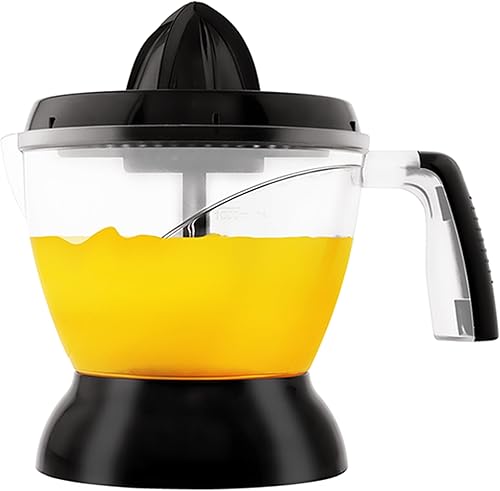
- Power 150 W
- Jar / bowl capacity 40.0 oz
- Jar / bowl material Plastic
- Color Black
The Boss 8962 at $28.12 steps up to 150 W with a 40 oz plastic pitcher in a black finish, offering meaningfully more motor power than the sub-$20 stainless models without entering premium pricing territory. Its 4.2 rating from 509 reviews is a solid signal for this price band. The 150 W output makes short work of firm navel oranges and grapefruits that lower-wattage models work harder on.
Best for: Buyers who want noticeably more motor power than budget models without stepping up to $50 or more
Pros
- 150 W motor handles firm citrus varieties that lower-wattage models struggle with
- 40 oz large-capacity pitcher reduces how often you need to stop and pour
- 509 reviews at 4.2 stars shows real buyer confidence in the $28 range
- Competitively priced against other 150 W options
- Black finish complements most kitchen color schemes
Cons
- Plastic pitcher is less durable over time than stainless alternatives
- No dimensions available to verify counter footprint before buying
Bottom line: The jump from 40 W to 150 W is real and useful for anyone who regularly juices grapefruits or firm oranges. The Boss 8962 delivers that at a fair price.
Check price on Amazon Read the full review →
The Cuisinart CCJ-500C at $52.02 brings 1,000 verified reviews and a 4.3 rating along with the Cuisinart brand name that carries real meaning in kitchen appliances. While its specs are not fully published in the available data, 1,000 reviews at 4.3 stars over years of sales reflect consistent buyer satisfaction from a known appliance manufacturer. It sits at a clear step up in price from the sub-$30 segment and is the pick for buyers who want a recognized brand behind their purchase.
Best for: Buyers who prioritize brand recognition and proven customer satisfaction over spec-sheet comparisons
Pros
- 1,000 verified reviews at 4.3 stars from a well-known kitchen appliance brand
- Cuisinart's reputation for quality and customer support adds purchase confidence
- Pricing at $52.02 reflects a genuine mid-tier positioning
- InStock and widely available
- A reliable choice for buyers who stick to established brands
Cons
- Full spec details are not published in available data, making direct comparisons harder
- At $52 it is more expensive than several equally rated alternatives
Bottom line: A thousand reviews does not happen by accident. The Cuisinart CCJ-500C earns its place for brand-loyal shoppers at a mid-range price.
Check price on Amazon Read the full review →
- Power 150 W
- Jar / bowl capacity 16.9 oz
- Jar / bowl material Plastic
- Blade material Stainless Steel
- Finish Glass
- Color Yellow
The Chef'n 5284627 at $18.07 is the smallest and lightest pick on this list at just 5.31 by 7.09 by 5.12 inches and 0.37 lb. The 16.9 oz plastic bowl with stainless steel blades and a yellow colorway targets buyers who want something lightweight and easy to tuck away. Its 4.4 rating from 466 reviews confirms it delivers on the basics. The 150 W motor spec is surprisingly capable for such a compact frame.
Best for: Single-serving daily juicers, small kitchens and anyone who stores their appliances between uses
Pros
- 0.37 lb weight and 5-inch height make it the easiest model to store
- 4.4 stars from 466 reviews at a very accessible $18.07 price
- Stainless steel blades resist citrus acid staining
- 150 W motor spec punches above the size for this class of juicer
- Yellow color adds a cheerful accent to any kitchen
Cons
- 16.9 oz bowl is the smallest pitcher capacity on this list, requiring frequent emptying during batch use
- Plastic bowl will stain over time with heavy daily use
Bottom line: If storage space is a real constraint, the Chef'n is the pick. Under 0.4 lb and 4.4 stars for $18 is a genuinely good deal.
Check price on Amazon Read the full review →
- Power 40 W
- Jar / bowl material Stainless Steel
- Blade material Stainless Steel
- Finish Polished
- Color White
- Dimensions 8.1 X 6.4 X 6.2 In
The Dominion DCJ240 at $16.99 earns a 4.5 rating from 155 reviews, matching the Elite Gourmet ETS623 for highest rating on this list. Its stainless steel construction, polished finish and 8.1 by 6.4 by 6.2 inch footprint at 40 W make it a tidy, capable machine for everyday light juicing. The 110 V spec confirms standard US compatibility. At this price with that rating it is worth considering alongside the Elite Gourmet options.
Best for: Budget shoppers who want top-rated stainless quality and do not need a large pitcher or high wattage
Pros
- 4.5 star rating matches the highest on this list
- Stainless steel body and blades for under $17
- Polished finish looks clean and is easy to wipe down
- Compact 6.4 by 6.2 inch footprint fits small counter spaces
- 110 V standard compatibility with no adapter needed
Cons
- 155 reviews is a smaller sample than higher-ranked alternatives, adding slight uncertainty
- 40 W motor is limited for large or firm grapefruit varieties
Bottom line: A 4.5 star stainless juicer for under $17 with a clean footprint. The smaller review count is the only reservation.
Check price on Amazon Read the full review →
The Hamilton Beach 66333 at $39.70 carries a 3.9 rating from 132 reviews, placing it just above the minimum threshold for a recommendation. Hamilton Beach is a trusted kitchen appliance name, and at this price point the unit offers brand reliability for buyers who want a familiar label. Spec details are limited in the available data, which makes it harder to compare directly on paper, but the review base provides a reasonable baseline for everyday citrus juicing use.
Best for: Hamilton Beach loyalists who want a known brand at under $40 and do not need advanced specs
Pros
- Hamilton Beach brand name with established customer service support
- 3.9 rating from 132 reviews shows acceptable real-world satisfaction
- Priced at $39.70 in a competitive mid-range band
- InStock availability for immediate purchase
- Recognizable brand for buyers who prefer established appliance makers
Cons
- 3.9 rating is the lowest of any recommended pick on this list
- 132 reviews is a relatively small sample for firm confidence
Bottom line: Passes the rating threshold and comes from a reliable brand, but there are stronger options at similar or lower prices on this list.
Check price on Amazon Read the full review →
- Power 150 W
- Jar / bowl capacity 32.0 oz
- Speeds 1
- Jar / bowl material Plastic
- Blade material Metal
- Finish Sealed
The Waring BJ120C at $337.99 is the most expensive residential-grade citrus juicer on this list. Its 150 W motor, 32 oz plastic pitcher, metal blade construction and sealed white finish at 7.25 by 7.25 by 9.25 inches target buyers who want Waring's commercial heritage in a home-sized machine. The 3.9 rating from 100 reviews is modest but meets the minimum threshold. At 6.1 lb it is noticeably heavier than most competitors and built to stay on the counter.
Best for: Serious citrus juicers who want commercial-grade build quality in a home kitchen and have the budget and counter space for it
Pros
- Waring commercial heritage in a countertop-friendly size
- 150 W motor handles a full range of citrus including large grapefruits
- 32 oz pitcher is a practical size for household batch juicing
- Metal blade construction for long-term durability
- Sealed finish resists juice infiltration into the base
Cons
- At $337.99 it is priced far above any competing home-use option
- 3.9 rating from only 100 reviews gives limited confidence for the price
- 6.1 lb weight and permanent counter footprint not suited to small kitchens
Bottom line: The price is steep relative to what the spec sheet and review count justify for home use. Consider the Eurolux at $159.99 first unless the Waring brand specifically is the goal.
Check price on Amazon Read the full review →Models we'd skip
Also on the market, but the numbers don't make the case:
Vevor NS-2000E-2T Citrus Juicer
3.7 rating from 26 reviews falls below the 3.8 minimum threshold. At $599.90 for an unproven score, the risk-to-price ratio is not acceptable. The 89.3 lb weight also makes it a commercial installation, not a practical home purchase.
Uniworld UJC-N50 Citrus Juicer
Only 1 review despite a $604.08 price tag. A perfect 5.0 from a single buyer cannot be trusted as meaningful data. Buyers cannot make a confident decision at this price with so little feedback.
Buying guide
Electric vs. Manual: Which Type Fits Your Kitchen?
Manual citrus juicers rely on hand pressure against a reamer cone and have no motor to wear out. They are quiet, compact and typically under $25. Electric models use a motor to spin the reamer for you, which saves effort when you are juicing more than a few pieces at a time. If you juice a glass of orange juice every morning, a compact electric like the Elite Gourmet ETS623 at $13.99 is plenty. If you regularly squeeze citrus for cocktails, batch drinks or meal prep for multiple people, stepping up to a 150 W to 300 W model like the Eurolux or the Waring BJ120C becomes worthwhile. The line between the two is convenience at low volume versus capacity and speed at high volume.
Wattage and What It Actually Affects
Citrus juicers do not need the high wattage of a full blender. Most home models run between 40 W and 160 W, and commercial-style units reach 300 W. The 40 W Elite Gourmet models handle soft citrus like lemons, limes and small oranges without trouble. Where wattage matters more is with firm navel oranges, grapefruits and pomelos, which push back harder against the reamer cone. At 150 W, the Waring BJ120C and Boss 8962 handle those with ease. The Eurolux at 300 W is overkill for home use but appropriate if you are pushing through large quantities quickly. More wattage also tends to mean a heavier, less cabinet-friendly machine, so match the power to your actual juicing load.
Capacity: How Much Juice Does the Pitcher Hold?
The pitcher or reservoir under the reamer collects juice so you are not constantly pouring off what you have squeezed. Capacity ranges from around 17 oz in the Chef'n 5284627 up to 40.6 oz in the Luukmonde D-8020A and the Elite Gourmet ETS740. If you juice one or two pieces of fruit at a time, a 17 oz to 27 oz pitcher is more than enough. If you are making a full pitcher of lemonade or prepping juice for a crowd, a larger reservoir means fewer interruptions. The Waring BJ120C sits at 32 oz and hits a practical middle ground for most households. Check that the reservoir is dishwasher-safe before buying, since juice gets sticky fast.
Build Materials: Plastic, Stainless Steel and Die Cast
Most budget citrus juicers use plastic pitchers and reamer assemblies. Plastic is lightweight, easy to clean and fine for occasional home use. Stainless steel components, like those on the Elite Gourmet ETS623 and Waring BJ120C, resist staining from citrus acid and tend to hold up better over years of daily use. Die-cast aluminum or zinc construction, as seen on the Eurolux DEYS-JS-1127-093, is the sturdiest option and the choice of commercial-leaning buyers who want minimal flex in the housing. Heavier build materials also tend to reduce vibration, which keeps the unit from walking across the counter during use. If you plan to juice every day, spending a little more on metal construction usually pays off within a year or two.
Size and Counter Footprint
Citrus juicers tend to be more compact than full centrifugal or masticating juicers, but sizes still vary meaningfully. The Chef'n 5284627 measures just 5.31 by 7.09 by 5.12 inches and weighs 0.37 lb, making it easy to tuck in a drawer. The Luukmonde D-8020A at 6.3 by 7.87 by 9.06 inches and 2.2 lb is still easily stored. Commercial units like the Eurolux at roughly 7.87 by 7.87 by 13.39 inches take more dedicated counter space. Measure the clearance under your upper cabinets before ordering anything taller than 10 inches. A machine you store instead of leaving out tends to get used less, so matching the footprint to your available counter space matters more than it might seem.
Price Ranges and What to Expect at Each Level
Under $20: the Elite Gourmet ETS623 ($13.99) and ETS740 ($16.12) and Dominion DCJ240 ($16.99) are basic electric reamers with stainless steel construction and solid ratings. These handle daily single-serving use well. $18 to $40: the Chef'n 5284627 ($18.07), Boss 8962 ($28.12), Hamilton Beach 66333 ($39.70) and Zulay Kitchen ($39.99) add more capacity or slightly more robust builds. $50 to $60: the Cuisinart CCJ-500C ($52.02) brings a recognized brand name and 1,000 verified reviews. $150 to $340: the Eurolux DEYS-JS-1127-093 ($159.99) and Waring BJ120C ($337.99) are built for users who juice daily in volume and want metal construction that holds up.
Common mistakes to avoid
- Buying more wattage than needed: a 40 W model handles lemons and limes fine, and paying for 300 W when you juice one orange a day wastes money.
- Ignoring pitcher capacity: a small reservoir means stopping to pour every few pieces, which turns a quick task into an annoying one.
- Skipping the dishwasher-safe check: citrus juice is acidic and sticky, and hand-washing a fiddly reamer assembly gets old fast.
- Trusting a 5-star rating with only one or two reviews: a perfect score on one review tells you almost nothing; look for ratings backed by hundreds of buyers.
- Ordering a commercial-scale unit for home use: a 89 lb machine designed for juice bars is wasteful, hard to move and hard to clean in a home kitchen.
- Not checking the footprint against your cabinets: some taller models will not fit under standard upper cabinets and end up living on a shelf rather than the counter.
Frequently asked questions
What is the difference between a citrus juicer and a regular juicer?
A citrus juicer is designed specifically for halved citrus fruit: oranges, lemons, limes and grapefruits. The reamer cone fits the curved inside of a citrus half and spins or presses to extract juice while a strainer catches seeds and pulp. A regular centrifugal or masticating juicer is designed for whole fruits and vegetables fed through a chute. You can technically run citrus through a centrifugal juicer, but a dedicated citrus juicer extracts more juice from citrus specifically, requires far less cleanup and takes up much less counter space. For households that only ever juice citrus, a dedicated citrus juicer is the practical and economical choice.
How many watts do I need for a citrus juicer?
For lemons, limes and soft oranges, 40 W is sufficient and the Elite Gourmet models at that wattage have proven it across thousands of reviews. For firm navel oranges and large grapefruits, 100 W to 160 W makes the process easier and faster. If you are juicing large volumes daily, 150 W to 300 W becomes worth the larger footprint and higher price. Most home users fall in the 40 W to 160 W range. Matching wattage to your typical citrus variety and volume is the right approach, since more wattage also means more weight and usually more counter space required.
Are cheap citrus juicers worth buying?
Yes, in many cases. The Elite Gourmet ETS623 at $13.99 carries a 4.5 rating from 6,897 buyers, which is a strong signal that the product delivers on its basic promise at a very accessible price. The Luukmonde D-8020A at $23.99 has the largest review base in this category at 7,900 reviews with a 4.4 rating. Budget citrus juicers tend to use more plastic and lower-power motors, which is fine for light daily use but may not hold up as well under heavy daily volumes over several years. If you juice every day for a large family, investing $50 to $160 in a sturdier model is reasonable. For one or two servings a day, the budget options perform well.
Can a citrus juicer handle grapefruits?
Most electric citrus juicers include two reamer cone sizes, a smaller one for lemons and limes and a larger one for oranges and grapefruits. Check the product listing to confirm both cones are included before buying if grapefruit is a priority. A higher-wattage motor makes extracting juice from a large, firm grapefruit easier. The Waring BJ120C at 150 W and the Eurolux DEYS-JS-1127-093 at 300 W are the strongest performers in this lineup for large citrus. If you only juice grapefruits occasionally, even a mid-range model handles it, just with a bit more hand pressure needed.
How do I clean a citrus juicer?
The fastest approach is to rinse the reamer cone and strainer immediately after use before the juice dries. Most reamer cones and pitchers on consumer models are dishwasher safe on the top rack, though you should confirm for your specific model. The motor base should never be submerged; wipe it with a damp cloth. Stainless steel parts resist staining better than plastic over repeated washes with acidic juice. Letting juice sit on plastic parts for hours before washing leads to staining and odors over time. A quick rinse right after juicing is the single best habit for keeping any citrus juicer clean and odor-free.
What makes the Eurolux worth $159.99 when budget options cost under $20?
The Eurolux DEYS-JS-1127-093 has the strongest demand signal in this category with 300 bought last month alongside 775 reviews and a 4.2 rating. Its die-cast construction and 300 W motor are built for users who juice every day in larger volumes and want a machine that holds up to that workload. The stainless steel blade material and die-cast body reduce flex and vibration compared to plastic alternatives. If you juice one or two servings a day, the budget models are genuinely sufficient. The Eurolux makes sense for households that juice daily, for entertaining or for anyone who has worn out cheaper models and wants something more durable.
What is the best citrus juicer for occasional use?
The Elite Gourmet ETS623 at $13.99 is the clearest answer for occasional users. It carries a 4.5 rating from 6,897 buyers and a 40 W motor that handles lemons, limes and standard oranges without trouble. The 7.28 by 5.71 by 7.68 inch footprint is compact enough to store easily. The Chef'n 5284627 at $18.07 is another strong choice, with a 16.9 oz plastic bowl, stainless steel blades and a 0.37 lb weight that makes it easy to grab and put away. Either of these handles a few pieces of citrus a week without any practical limitations and neither requires a dedicated counter spot.
Final recommendation
The citrus juicer category has a genuinely good spread of options at almost every price point. The Eurolux DEYS-JS-1127-093 leads on real demand with 300 units bought last month, making it the most confident recommendation for regular use. The Elite Gourmet ETS623 at $13.99 is the easy answer for anyone who wants a proven, low-cost tool backed by nearly 7,000 ratings. Wherever your budget lands, the picks on this list have the review volume and ratings to back them up. Questions about a specific model or use case are welcome at hello@kitchenexplorers.com.