Food Processor vs Blender: Which One Is Right for Your Kitchen?
A food processor handles dry, chunky work: chopping onions, shredding cabbage, slicing potatoes, and making pie dough. A blender excels at wet, liquid-heavy tasks: smoothies, pureed soups, nut butters, and sauces that need a completely smooth finish. The two machines overlap in a few areas, but each has a clear home territory.
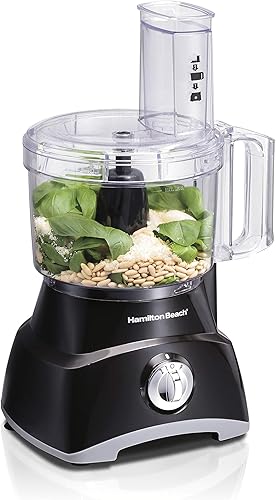


What a Food Processor Actually Does Well
Food processors are built around a wide, shallow bowl and interchangeable blades that spin horizontally near the bottom. That design lets them chop, dice, slice, shred, and knead without needing liquid to move the food around. A model like the Hamilton Beach 70740, rated 4.5 stars across 18,300 reviews and priced around $62, runs 450 W and holds a 64 oz bowl, which is enough capacity to prep vegetables for a full week of meals in one session. The pulse function found on many processors gives you short, controlled bursts so you can stop at coarse-chopped without accidentally pureeing. Tasks like making hummus, salsa, shredded cheese, pie or bread dough, and nut butters all land squarely in food processor territory.
What a Blender Actually Does Well
Blenders have a tall, narrow jar and a blade at the very bottom that creates a vortex pulling ingredients downward. That shape requires liquid to function properly, which is why blenders produce silky-smooth results when liquid is present but struggle with dry or chunky loads. A countertop blender can fully liquefy fibrous greens, frozen fruit, and ice into a smooth drink in seconds, something even a powerful food processor cannot match. Blenders also handle hot liquids well for pureed soups, and high-speed models can heat soup through friction alone. For smoothies, protein shakes, frozen cocktails, and creamy sauces, a blender is the faster and cleaner choice.
Where They Overlap and Where the Differences Matter Most
Both machines can chop soft vegetables, blend a vinaigrette, or make a rough salsa, so if your cooking is light on volume, either might do the job. The differences become clear at scale and texture. A food processor gives you consistent, controlled pieces at high volume. The Cuisinart DFP-14BCNY, for example, holds 112 oz, draws 720 W, and carries a 4.6-star rating from more than 22,000 buyers at around $250, making it a serious prep tool for households that cook in quantity. A blender, by contrast, is faster for small batches of anything wet but cannot slice or shred. If you try to chop onions in a blender jar, you get mush at the bottom and whole pieces at the top.
Small-Scale Processors: A Budget Middle Ground
Compact food processors under 20 oz capacity serve a different niche entirely. The La Reveuse LARB1814B holds 16 oz, runs at 200 W with two speeds and a pulse, weighs 1.5 lb, and sells for around $30 with a 4.4-star rating from nearly 2,000 buyers. That format is genuinely useful for chopping half an onion, mincing garlic, or making a single serving of dip, tasks where a full-size processor feels like overkill and a blender would require more cleanup. The tradeoff is obvious: you cannot slice, shred, or handle a large batch in a 16 oz bowl. Know your actual batch size before deciding how much capacity you need.
Can One Machine Replace the Other?
Combination machines that include both a processor bowl and a blender jar exist, but they tend to compromise on both sides. A dedicated blender almost always outperforms the blending jar that comes with a processor combo, and vice versa. If budget or counter space forces a single choice, consider your most frequent task: smoothies and soups point to a blender, while meal prep chopping and dough making point to a food processor. Many cooks eventually own both, especially once they discover that the machines rarely compete for the same job at the same time.
Cleanup and Practical Maintenance
Food processors have more parts: the bowl, lid, pusher, and multiple blades or discs. More parts means more to wash, though most components are dishwasher-safe on current models. Blender jars are simpler to rinse because you can add warm water and a drop of soap and run the motor for 30 seconds. If you are short on time and make the same things every day, that cleanup difference adds up. Factor in how often you will actually use each machine, because a faster post-use cleanup often determines which appliance gets used regularly and which one stays in the cabinet.
Common mistakes to avoid
- Trying to chop dry vegetables in a blender without liquid, which results in uneven pieces and food caught above the blade.
- Overfilling a food processor bowl with wet ingredients and then running it at full speed, which causes leaking around the lid seal.
- Buying a compact mini chopper and expecting it to handle a full batch of bread dough or a week of vegetable prep.
- Choosing a combination blender-processor unit to save money, then finding the blending performance is too weak for daily smoothies.
- Running a blender without enough liquid, which stalls the blade and can overheat the motor on lower-wattage models.
- Ignoring bowl or jar capacity relative to actual batch size, and then stopping to empty and re-run multiple times per recipe.
Frequently asked questions
Can I use a food processor to make smoothies?
You can blend soft fruit and yogurt in a food processor, but the result will be chunkier than a blender produces. The wide, shallow bowl does not create the same downward vortex that pulls ingredients into the blade. For daily smoothies, especially ones with frozen fruit or ice, a blender is the more practical and faster tool.
Can a blender chop onions or slice vegetables?
A blender cannot slice or shred, and chopping onions in a blender typically produces mush at the bottom and large pieces near the top due to uneven blade contact. For any task that requires consistent piece size on a firm vegetable, a food processor with a chopping or slicing disc is the right choice.
Which is easier to clean, a food processor or a blender?
Blenders generally clean faster because you can fill the jar with water and soap and run it for 30 seconds. Food processors have more removable parts, including the bowl, lid, blade, and sometimes multiple discs. Both are manageable, but if daily cleanup time matters to you, a blender has a slight edge for wet tasks.
Do I need both a food processor and a blender?
If you cook regularly from scratch and also make smoothies or pureed soups, owning both is worthwhile because the machines rarely compete for the same job. If your cooking is limited in scope, think about your most frequent task: smoothies and sauces favor a blender, while chopping, slicing, and dough making favor a food processor. Start with the one that fits your actual habits.
What size food processor is most useful for a home cook?
A bowl in the 64 to 112 oz range covers most home cooking tasks without being oversized. The Hamilton Beach 70740 at 64 oz handles large batches of chopped vegetables or shredded ingredients, while something like the Cuisinart DFP-14BCNY at 112 oz suits households that batch-prep or cook for larger groups. Compact models under 24 oz are handy for small daily tasks like mincing garlic or making a single-serve dip, but they cannot replace a full-size machine for serious prep work.