How to Choose a Food Processor
Choose a food processor by starting with bowl capacity, since that determines what recipes it can handle in one batch. Then check wattage to make sure the motor can handle dense foods like nuts or raw carrots without straining. Finally, confirm the included blades and discs cover the tasks you actually cook.
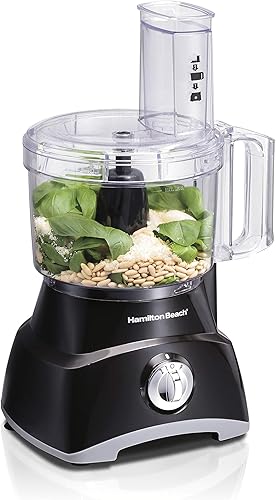


How Much Bowl Capacity Do You Actually Need
Bowl size is measured in ounces or cups, and the range across home models is wide. Compact models like the La Reveuse LARB1814B hold 16 oz (2 cups) and are fine for sauces, dips, and small batches of herbs, all at $29.99 with a 4.4-star rating across nearly 2,000 reviews. Mid-size bowls in the 64 to 96 oz range handle a full batch of pie dough, shredded cabbage for slaw, or sliced vegetables for a week of meals. The Cuisinart DFP-14BCNY offers 112 oz of capacity with a 720 W motor and has earned 4.6 stars from over 22,000 buyers at around $250, making it a clear choice for households that cook in volume. A single person or couple rarely needs more than 48 oz, while families cooking four or more portions per meal will feel the difference immediately at 96 oz and above.
Wattage and What It Means for Real Cooking
Wattage tells you how much work the motor can sustain before it slows down or trips the thermal overload. Most home food processors run between 200 W and 720 W. Low wattage models, around 200 W, handle soft vegetables, fresh herbs, and pre-cooked ingredients without trouble. Once you start adding raw sweet potatoes, hard cheeses, or thick hummus made from dried chickpeas, you want at least 400 W to keep a steady pace. The Hamilton Beach 70740 delivers 450 W with a 64 oz bowl for $62.29 and holds a 4.5-star rating from over 18,000 buyers, which reflects solid real-world performance at a budget price. Commercial-grade units push past 1,000 W and are built for continuous use, but they carry a significant cost and footprint that rarely makes sense outside a professional kitchen.
Blades, Discs, and What Each One Does
The standard S-blade chops, minces, purees, and makes dough. It comes with every food processor and handles the majority of tasks. Slicing and shredding discs are the next most useful attachments, letting you break down a head of cabbage or grate a block of cheese in seconds. Some models include a dough blade with a blunt edge designed to fold rather than cut, which is gentler on gluten structure for bread or pizza. When comparing models, check what is included in the box rather than what can be purchased separately, since accessory prices add up. If you do a lot of shredding for salads or cheese boards, confirm the disc gauge options since fine and coarse settings give noticeably different results.
Speeds, Pulse, and When Each Matters
Most home food processors offer two speeds plus a pulse function. The pulse button is arguably more important than having multiple speed settings because it gives you direct control over texture. Short pulses let you stop just before the mix turns from coarsely chopped to mush, which is the difference between a chunky salsa and a watery puree. The La Reveuse LARB1814B includes a pulse function alongside two speeds in a 16 oz bowl, and at $29.99 it is one of the more affordable compact options with that combination. If a model only advertises speed settings without pulse, look carefully at whether that fits your style of cooking, since baked goods, nut butters, and anything with a target texture rely on the pulse function more than raw speed.
Bowl Material and Ease of Cleaning
Plastic bowls are lighter and less expensive, while stainless steel bowls resist staining and odor absorption from garlic or onion. Glass bowls offer odor resistance similar to stainless without scratching, though they add weight. For daily use, check whether the bowl and blade assembly are dishwasher safe, since hand-washing a bowl with crevices and a sharp S-blade is tedious. The feed tube size matters too. A wide-mouth feed tube lets you process a whole tomato or a full carrot without pre-cutting, which saves time during meal prep. Look for a lid that locks firmly without requiring excessive force, since a poorly fitted lid leaks liquid under the rim when processing wet mixtures.
Compact vs. Full-Size: Choosing the Right Footprint
A full-size food processor, typically 10 to 14 cups, earns its counter space if you batch-cook, entertain regularly, or prep vegetables for several meals at once. If you use a food processor a few times a week for smaller tasks, a compact model under 4 cups takes less room and is faster to set up and rinse. Consider where you plan to store it. Heavy units are less likely to be used if they live on a high shelf. The Cuisinart DFP-14BCNY measures 11 x 7.9 x 14.8 inches and weighs 18 lb, so it fits under standard upper cabinets but stays parked on the counter for most owners. A compact like the La Reveuse at under 1.5 lb tucks into a cabinet easily and is ready in seconds.
Common mistakes to avoid
- Buying by brand name alone and ignoring bowl size, which leads to a machine that cannot handle a full recipe without two separate runs.
- Choosing the lowest-wattage option available without checking whether it can handle the specific foods you cook most, such as raw root vegetables or nut-based dips.
- Overlooking whether the pulse function is included, then struggling to get consistent texture on salsas, pastry dough, or coarsely chopped mixtures.
- Assuming all listed accessories are included in the base price rather than sold separately, which can raise the real cost by $30 to $80 after purchase.
- Selecting a full-size unit for solo cooking because it seems like better value, then finding it too cumbersome to use regularly for small tasks.
- Forgetting to check voltage before buying, since several models in this category run on 220 to 230 V and will not operate on a standard 120 V North American outlet.
Frequently asked questions
What wattage is enough for a home food processor?
For most home cooking, 400 W to 600 W covers the full range of tasks including dough, dense vegetables, and nut processing. Models under 250 W work for soft ingredients and light chopping but can bog down on harder or denser foods. If you plan to make hummus from scratch or knead bread dough regularly, aim for at least 500 W.
How big a bowl do I need for a family of four?
A 64 to 96 oz bowl handles most family-size recipes without splitting a batch. The Hamilton Beach 70740 offers a 64 oz bowl for under $65 and has the review volume to back up its durability claim. If you regularly cook double batches or entertain, stepping up to 96 oz or a 14-cup model gives you room to process without stopping mid-recipe.
Is a food processor the same as a blender?
No. A food processor uses interchangeable blades and discs to chop, slice, shred, and mix, while a blender uses a fixed blade and narrow jar optimized for liquids and smooth purees. A food processor handles dry and chunky tasks better, while a blender is faster for soups, smoothies, and sauces. Many cooks own both because the overlap is limited.
Can I put food processor parts in the dishwasher?
Most plastic bowls and standard S-blades are labeled dishwasher safe, usually on the top rack only. Stainless steel blades can dull faster in the dishwasher over time, so hand-washing extends their life. Always confirm the specific model's care instructions since materials and coatings vary, even within the same brand.
What is the difference between a mini chopper and a full food processor?
A mini chopper typically holds 2 to 4 cups, runs a single S-blade, and handles garlic, onion, nuts, and small dips without fuss. A full food processor includes disc attachments for slicing and shredding, a larger motor, and a much bigger bowl for batch cooking. If your use case is mostly small quantities of soft ingredients, a mini chopper is faster to use and clean. For anything beyond that, the full processor is worth the extra size.