What Can a Slow Juicer Make? More Than You Think
A slow (masticating) juicer can make fresh fruit and vegetable juice, nut milks, baby food purees, frozen sorbets, and even pasta or breadsticks with the right attachments. Most horizontal-auger models also homogenize soft foods into smooth butters or sauces. The range of output is wide enough that many households use the machine as a light-duty food processor for soft ingredients.

Fresh Juice from Vegetables and Leafy Greens
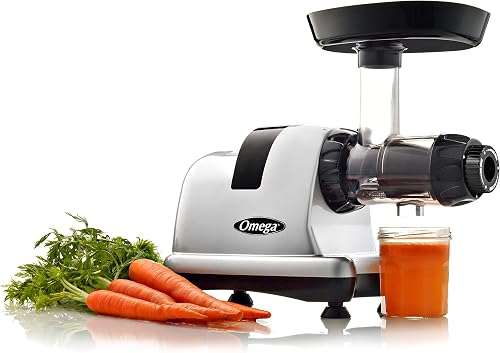
Leafy greens are where masticating juicers outperform every other type. Spinach, kale, wheatgrass, and parsley all get pressed rather than shredded, so the auger squeezes more liquid from the cell walls. Carrots, beets, celery, and cucumber run through cleanly in most machines. The Omega J8007S (200W, 4.5 stars across 410 reviews) handles hard roots and soft leaves in the same session without clogging. Juice yield from dense greens is noticeably higher than you get from a centrifugal machine, which matters when greens are expensive or you are buying organic. The tradeoff is throughput: you feed produce in smaller pieces and the process takes longer.
Fruit Juice and Citrus
Stone fruits, berries, apples, pears, and grapes all juice well in a masticating machine. Remove pits before feeding anything with a hard stone or you risk jamming the auger. Citrus can go through the feeding chute in most models once you remove the peel, though the pith can add bitterness if left on. Soft fruits like strawberries and mango produce a thick, pulpy juice that is closer to a pressed nectar. If you want a cleaner texture, strain through a fine mesh after pressing. The slow speed limits foaming, so the finished juice is denser and separates less quickly than centrifugal output.
Nut Milks and Plant-Based Milks
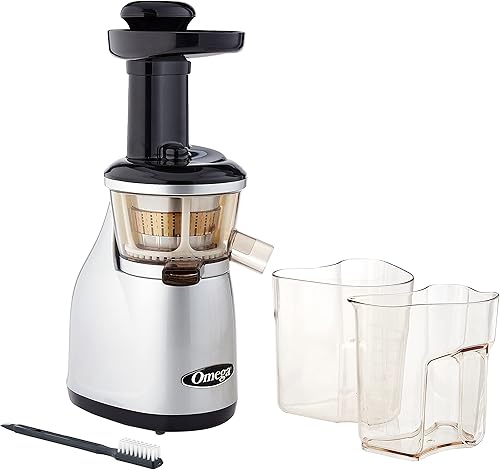
Soaked almonds, cashews, hemp seeds, and oats all pass through a masticating juicer to make plant milks. You soak the nuts overnight, run them through with water, and the machine separates liquid from the fine pulp. The Omega VRT350 (150W, 4.3 stars across 1,500 reviews) and similar vertical-auger units handle this well with the blank strainer screen swapped in. The milk comes out thin and clean without the gritty texture you sometimes get from a high-speed blender. Leftover nut pulp is dry enough to use in baked goods or energy balls.
Sorbets, Ice Cream, and Frozen Desserts
Frozen fruit run through a masticating juicer with a blank or homogenizing screen turns into a smooth, soft-serve texture. Frozen bananas are the most popular base and blend into a creamy consistency with no added sugar or dairy. Frozen mango, peaches, or mixed berries work the same way. The Ventray 809 (240W, 20.3 oz juice cup, 4.3 stars across 438 reviews) is a solid choice for this task because the 240W motor pushes through frozen material without stalling. Feed the fruit in small chunks and alternate between soft and firm pieces to keep the flow steady.
Baby Food and Soft Purees
Cooked vegetables and soft fruits pass through a masticating juicer to produce smooth purees with no added thickeners. Steamed sweet potato, cooked peas, ripe avocado, and soft pear all work. The low-speed press keeps heat introduction minimal, which matters for preserving nutrients in food meant for infants. You control texture by adjusting the strainer insert: a fine screen gives a smoother result, while a coarser one leaves more body. Batch prep and freeze in ice cube trays is a common approach for weekly meal planning.
Nut Butters, Pastes, and Sauces
Roasted nuts run through a masticating juicer with the blank plate installed produce a coarse nut butter. Peanuts, almonds, and sunflower seeds all work, though you typically need two or three passes for a smooth finish. Cooked chickpeas pressed through the machine give a rough hummus base that you season and adjust afterward. Tomato paste, salsa base, and mashed fruit sauces are also doable with the right attachment. This is not the same output you get from a dedicated food processor, but for small batches it avoids dirtying an extra appliance.
Common mistakes to avoid
- Feeding whole hard produce without cutting it down first, which jams the auger and strains the motor
- Skipping the presoak step when making nut milks, which results in gritty texture and lower yield
- Running frozen fruit through without cutting it into small pieces, causing the machine to stall mid-feed
- Leaving the pith on citrus when juicing without a dedicated citrus attachment, which adds bitterness to the juice
- Not alternating between hard and soft produce during a mixed juice run, which leads to uneven extraction and dry pulp
- Expecting the same throughput speed as a centrifugal juicer, then rushing the feed rate and forcing produce into the chute
Frequently asked questions
Can a slow juicer handle wheatgrass?
Yes. Masticating juicers are the standard recommendation for wheatgrass because the auger presses the thin blades rather than shredding them. A centrifugal machine often spits wheatgrass out mostly dry. Feed a small handful at a time and alternate with a firmer vegetable if the machine slows down.
Can I make almond milk in a masticating juicer?
You can, provided you soak the almonds for at least eight hours first. Run the soaked almonds through with a cup or two of water and use the blank strainer screen. The output is a thin, clean milk. Strain once more through a nut milk bag if you want it very smooth.
Is the juice from a slow juicer really different from a centrifugal juicer?
The main practical differences are yield and shelf life. Masticating juice tends to have less foam, more color, and holds its texture longer in the fridge, typically up to 48 to 72 hours before noticeable separation. Whether the nutrient difference is significant in everyday use is debated, but the lower foam and slower oxidation are measurable.
Can a masticating juicer replace a food processor for soft foods?
For soft ingredients it can substitute in many tasks: purees, nut butters, sorbets, and baby food. It does not chop, slice, or shred, so anything requiring those functions still needs a dedicated food processor. Think of it as a complement rather than a replacement.
What should I not put through a slow juicer?
Avoid hard pits from stone fruits, whole coconut meat without pre-cutting, and large frozen blocks. Very fibrous stalks like broccoli stems or thick asparagus should be cut into short pieces first. Banana peels and mango skin can clog fine strainer screens, so peel those before feeding.