How to Choose a Masticating Juicer
A masticating juicer uses a slow-turning auger to crush and press produce, which typically yields more juice and preserves more nutrients than a fast-spinning centrifugal machine. The most important factors to weigh are motor power, auger material, feed chute size, and how many parts you have to wash after each use. Budget and countertop footprint usually narrow the field from there.

Motor Power and What It Actually Affects
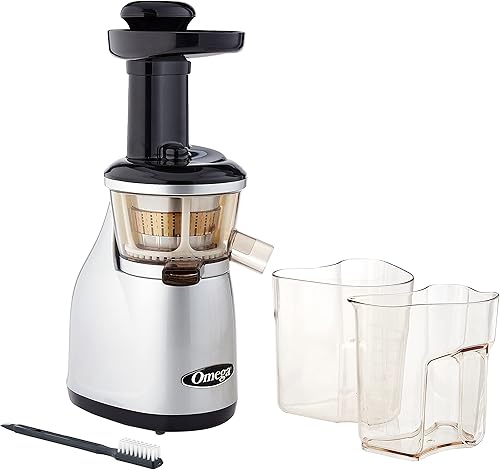
Most masticating juicers run between 100 and 250 watts, and that range is enough for the vast majority of produce. The Elite Gourmet EJX600, priced around $43 with over 5,300 ratings, runs at 100 watts and handles soft fruits and most vegetables without issue. The Omega J8007S runs at 200 watts and costs around $200, which gives it a bit more headroom when you push through dense beets or fibrous ginger root. A higher wattage motor is worth paying for if your weekly routine includes a lot of hard root vegetables, but for mostly leafy greens, apples, and citrus, anything in the 150-watt range is sufficient. Do not use wattage alone as a proxy for juice quality, since auger design and pressing speed influence yield as much as raw power does.
Vertical vs. Horizontal Auger Design
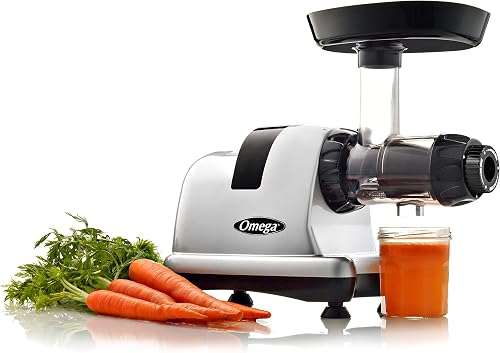
Masticating juicers come in two configurations: vertical, where the auger stands upright, and horizontal, where it lies on its side. Vertical models tend to have a smaller footprint on the counter and are generally easier to feed produce into because gravity helps move ingredients toward the auger. Horizontal models, like the Omega VRT350 at around $200 with over 1,500 ratings and an 18-pound chassis, are often better at processing leafy greens and wheatgrass because the horizontal press gives more contact time. If counter space is tight and you mostly juice fruit and softer vegetables, a vertical design is usually the more practical choice. If you juice a wide variety of produce including greens and tough stalks, a horizontal model tends to handle the range more consistently.
Feed Chute Size and Prep Work
A wider feed chute means less chopping before you juice. Many masticating juicers have relatively narrow feed tubes compared to centrifugal models, so check the opening dimensions before buying if you dislike pre-cutting. The Omega J8007S measures about 19.69 by 7.09 by 13 inches overall and uses a standard narrow chute, which means apples and large beets need to be halved or quartered first. Some wide-mouth masticating juicers accept whole small fruits, which cuts prep time noticeably. If speed of prep matters to you as much as juice quality, a wide-chute design is worth the extra cost.
Auger and Juice Bowl Materials
The auger is the part that does the actual crushing, so its material affects both durability and long-term flavor neutrality. Stainless steel augers are more durable and less prone to staining or absorbing odors over time. Polycarbonate and Ultem PEI augers are lighter and in many cases food-safe, but they can scratch more easily, and scratches can harbor residue. The juice bowl and strainer basket are similarly important: stainless steel and Tritan plastic both hold up well to daily use and are easier to sanitize than standard ABS plastic. Check the materials list in the product specs before deciding, especially if you juice highly pigmented produce like beets or turmeric.
Ease of Cleaning
Cleaning is the most common complaint among masticating juicer owners, and it is worth treating seriously before you buy. Count the number of parts that need rinsing after each use: most models require you to disassemble and rinse 4 to 6 components. A model that is annoying to clean will get used less often, which defeats the purpose of buying it. Look for parts that are dishwasher-safe or have smooth surfaces without deep ridges where pulp can pack in. Some models include a cleaning brush, which is a sign the manufacturer acknowledges the chore. Reading through low-star reviews on models you are considering is the fastest way to learn whether a given design is genuinely tedious to clean.
Budget Brackets and What You Give Up
Under $80 gets you a functional masticating juicer with basic performance, like the Elite Gourmet EJX600 at around $43 with stainless steel blades and a 16-ounce juice cup. Expect narrower chutes, lighter materials, and fewer spare parts available if something breaks. The $150 to $250 range, where the Omega J8007S and VRT350 sit, adds more robust construction, better noise dampening, and generally longer warranties. Above $300 you are mostly paying for wider chutes, larger juice capacity, premium materials throughout, or dual-stage pressing that extracts a bit more yield from each batch. For most households juicing a few times a week, the $150 to $250 range covers the bases without over-engineering the purchase.
Common mistakes to avoid
- Buying on wattage alone without checking auger material and strainer quality, which affect yield and durability more than motor power in most everyday use.
- Overlooking the feed chute diameter and then resenting the amount of chopping required before every juice session.
- Ignoring part count and cleaning complexity, which is the leading reason people stop using a masticating juicer within a few months.
- Assuming all masticating juicers handle leafy greens equally well. Horizontal auger designs generally outperform vertical ones on wheatgrass and tough greens.
- Not checking the warranty terms before buying. Masticating juicers have more moving parts than centrifugal models, and a short warranty on a $200-plus machine is a real risk.
- Choosing based on looks or color rather than footprint dimensions. A machine that measures 19 or 20 inches tall may not fit under standard upper cabinets.
Frequently asked questions
How slow is slow? What RPM do masticating juicers run at?
Most masticating juicers operate somewhere between 40 and 100 RPM, compared to 10,000 RPM or more for a centrifugal machine. The slower speed reduces heat and friction, which is why masticating juicers are often associated with better nutrient retention and less oxidation. In practical terms, it means juice takes a bit longer to produce, but the output is typically drier pulp and a juice with a slightly longer fridge life.
Can a masticating juicer handle citrus?
Yes, most masticating juicers can process whole peeled citrus, though they work best when you remove the thick outer peel first and leave the white pith, which adds bitterness only if you leave too much of it. If citrus is the majority of what you plan to juice, a dedicated citrus juicer is faster and simpler. A masticating juicer makes more sense when citrus is one ingredient in a broader mix of fruits and vegetables.
Is a masticating juicer worth the extra cost over a centrifugal model?
It depends on what you juice. If leafy greens, wheatgrass, and high-fiber vegetables are a regular part of your routine, a masticating juicer pays for itself in better yield and less wasted produce. If you mostly juice soft fruits and watery vegetables like cucumbers, a centrifugal machine does the job at a much lower price point. The quieter operation and lower RPM of a slow juicer are also real advantages if you juice early in the morning in a household where noise matters.
How long do masticating juicers last?
A well-built masticating juicer from a reputable brand should last 8 to 15 years with regular use, provided you do not force hard seeds or pits through it and rinse the strainer basket promptly after each use. The auger and strainer are the parts most subject to wear. Models like the Omega J8007S, rated 4.5 stars across 410 reviews, reflect the kind of long-term owner satisfaction that suggests solid build quality. Checking whether replacement parts are available for a specific model before buying is a practical step that many buyers skip.
What is the difference between single-gear and twin-gear masticating juicers?
Single-gear, or single-auger, masticating juicers are the most common type and cover the full price range from budget to premium. Twin-gear models use two interlocking gears to apply even more pressure to produce, which can increase yield slightly, especially on hard vegetables. Twin-gear machines are typically heavier, more expensive, and more involved to clean. For most home users, a quality single-auger machine delivers excellent results without the added complexity.