What Wattage Blender Do I Need?
The wattage you need depends on what you blend most often. Soft ingredients like yogurt, cooked vegetables, and ripe fruit blend fine at 300 to 600W, while frozen smoothies, nut butters, and crushed ice demand 1000W or more. Buying more wattage than your tasks require just means a heavier, noisier machine that costs more to run.


The Basic Wattage Tiers Explained
Consumer blenders typically fall into three practical bands. Entry-level models run 300 to 600W and cover light daily use: protein shakes with soft fruit, salad dressings, pancake batter, and pureeing cooked soups. Mid-range machines from 700 to 1000W add enough torque to handle ice cubes mixed with liquid, frozen berries, and raw leafy greens without straining the motor. High-performance blenders at 1200W and above, like the Waring MX1000XTX rated at 1560W ($498.91, 4.2 stars, 271 reviews), are built for demanding commercial-style workloads: whole frozen chunks, dense nut butters, and grinding grains. The jump from mid-range to high-performance comes with a real trade-off in weight and noise, so only make that move if your recipes genuinely call for it.
Light Use: 300 to 600W
If your blender mostly handles smoothies with fresh or thawed fruit, creamy soups from cooked vegetables, or the occasional salsa, a 300 to 600W motor is sufficient. The Cuisinart CPB-300P1 runs at 350W, weighs just under 3 pounds, and carries a 4.3-star rating from over 3,200 buyers, with around 300 units sold per month. That track record at a modest wattage shows most home tasks do not require a high-horsepower machine. Lower-watt blenders are also lighter, quieter, and easier to store. The main limitation is ice: pushing ice cubes through a sub-500W motor regularly shortens blade and motor life.
Everyday Versatility: 700 to 1200W
This range is where most families land, and for good reason. A 700 to 1200W blender handles frozen smoothies, crushed ice drinks, hummus, and raw-vegetable soups without much fuss. The motor has enough reserve power to clear a stall without overheating the way lower-watt machines can. Blade speed and jar design matter too, so a well-engineered 700W blender often outperforms a poorly designed 1000W one. If the spec sheet does not list wattage, that is a warning sign to look elsewhere.
High Performance: 1500W and Above
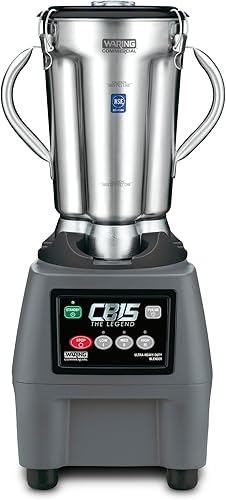
Blenders above 1500W are built for demanding tasks and frequent use. The Waring CB15 runs at 1800W with a stainless steel jar, 3 speeds, and an electronic touch keypad. At $1,240 it is aimed at semi-commercial kitchens rather than casual home cooks. That said, 1800W at home is warranted if you blend tough frozen produce multiple times a day, make nut butters from raw nuts, or process large batches in one go. The trade-off is real: the CB15 weighs 32 pounds, which means it stays on the counter full time. High wattage also means higher amp draw, so check that your outlet circuit can handle the load.
Motor Wattage vs. Peak Horsepower Claims
Many budget blenders advertise a peak horsepower number instead of a continuous wattage figure. Peak figures represent a brief burst the motor can reach under ideal conditions, not what it sustains while blending a thick smoothie. To compare apples to apples, look for the continuous or running wattage, which is the number that predicts real-world performance. If a listing only shows peak HP, treat the actual continuous watts as roughly 60 to 70 percent of that theoretical ceiling. Always prioritize blenders that publish a clear, honest wattage spec.
Other Factors That Work With Wattage
Wattage is not the whole story. Blade geometry, jar shape, and the vortex the jar creates all influence how efficiently a motor converts watts into blending power. A tapered jar that pulls ingredients down into the blades extracts more work from every watt than a straight-sided jar of the same capacity. Speed control also matters: more speed settings or presets give you finer control over texture, which reduces the need to compensate with raw power. When comparing two blenders with similar wattage, check the review count and rating together, as a product with a strong rating across thousands of buyers is a better signal than specs alone.
Common mistakes to avoid
- Buying the highest wattage available without considering the actual recipes you make most often, leading to a heavy machine you rarely use to its potential.
- Confusing peak horsepower with continuous wattage. Peak figures are marketing numbers and do not reflect sustained blending performance.
- Running ice cubes through a sub-500W blender regularly. That habit overloads the motor and dulls blades faster than any other single practice.
- Ignoring jar design when comparing wattage. A poorly shaped jar wastes motor power regardless of how many watts the motor draws.
- Assuming a higher price always means higher wattage. Some premium machines are priced for design or brand, not raw power.
- Overlooking the amperage draw on a high-wattage blender. Plugging a 1800W machine into an overloaded kitchen circuit trips breakers and can damage the motor over time.
Frequently asked questions
Is 300W enough for a smoothie?
Yes, if the smoothie uses fresh or thawed fruit and liquid. A 300W motor handles soft ingredients without trouble. If you regularly add frozen fruit or ice directly from the freezer, you will notice the motor straining and the blend will be less smooth. For frozen smoothies, aim for at least 600 to 700W.
What wattage do I need to crush ice?
Crushing ice reliably calls for at least 700W, and 1000W or more is more comfortable for frequent use. Blenders below 500W can crack individual cubes when blended with plenty of liquid, but sustained ice crushing at that power level shortens the motor and blade life noticeably. If frozen drinks are a regular habit, treat 700W as the minimum.
Do higher-wattage blenders make more noise?
Generally yes. A 1500W to 1800W blender running at full speed produces noticeably more noise than a 500W machine doing the same job at its ceiling. Some high-performance blenders include noise-dampening enclosures, which help. If a quiet kitchen matters to you, check user reviews specifically for noise comments before buying.
Is wattage the same as quality?
No. Wattage measures raw power input, not build quality, blade sharpness, jar engineering, or long-term durability. A well-built 700W blender from a reputable brand will outperform a poorly built 1200W machine on most home tasks. Rating and review count across a large buyer pool, like the Cuisinart CPB-300P1 with over 3,200 ratings at 4.3 stars, is often a better quality signal than wattage alone.
How do I find the wattage of a blender if it is not listed?
Check the bottom of the base or the motor housing for a UL or CE compliance label, which lists input watts or amps and voltage. Multiply amps by voltage (most US blenders run on 120V) to get approximate watts. If the spec is missing from both the product and its label, that is a sign the manufacturer is not publishing it for a reason, and the blender is worth skipping. You can also email hello@kitchenexplorers.com if you need help tracking down a specific model's specs.