High-Speed vs Regular Blender: What Actually Matters
High-speed blenders run roughly 1000 to 1800 watts and can pulverize ice, nuts, and fibrous vegetables into smooth, lump-free results. Regular blenders run closer to 300 to 700 watts and handle soft fruit smoothies, soups, and sauces without trouble. The right choice depends on what you blend most, not on which number sounds more impressive.


What Makes a Blender 'High-Speed'
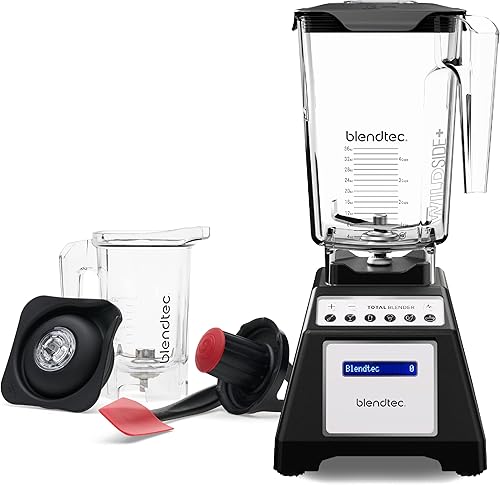
The term high-speed typically refers to motor power at or above 1000 watts, combined with a blade assembly designed to spin fast enough to break down cell walls rather than just chop. The Waring MX1000XTX, for example, runs at 1560W with stainless steel blades and weighs 13.24 lb, a build that reflects commercial-grade demands. Blendtec's blender reaches the same 1560W rating and offers 10 speed settings, giving you fine control over texture. At those power levels, the motor generates enough torque to keep speed consistent even when the jar is full of frozen fruit. Regular blenders in the 300 to 700 watt range simply cannot sustain that kind of throughput without stalling or overheating on dense loads.
What Regular Blenders Do Well
A regular blender priced under $100 and rated around 350 to 650W covers most everyday kitchen jobs without complaint. The Cuisinart CPB-300P1, rated at 350W with touch controls and a stainless steel jar, carries over 3,200 reviews and a 4.3-star rating, with roughly 300 units selling each month. That level of adoption shows the category is genuinely useful for smoothies, vinaigrettes, soups, and sauces made from cooked or soft ingredients. You pay significantly less, the machines are lighter, and they take up less counter space. The tradeoff is that ice crushing is slower, and green smoothies made with raw kale or spinach stems may come out slightly coarser.
The Real-World Speed Difference
Raw spinach in a 350W blender leaves small flecks after 30 to 60 seconds of blending. The same spinach in a 1560W blender turns silky in under 20 seconds because the blade tip speed is high enough to shear plant cells rather than tear them. The difference is most visible with three ingredients: leafy greens, whole nuts, and ice. For bananas, yogurt, cooked vegetables, or pantry staples like nut butter from a jar, the texture gap between a regular and a high-speed blender nearly disappears. Be honest about what fills your jar most mornings before spending the extra money.
Noise and Kitchen Reality
High-speed blenders are louder. A 1500W-plus motor running at full speed on ice can exceed 90 decibels, which is comparable to a lawnmower from a few feet away. Many commercial-grade models like the Waring MX1000XTX are designed for environments where that noise is expected. Regular blenders at 350 to 650W are still noisy, but the sound is less harsh and usually lasts a shorter time because you are blending softer ingredients. If you blend early in the morning in a shared space, or share walls with neighbors, the noise profile of a high-speed model is worth factoring into your decision.
Price, Durability, and the Long View
High-speed blenders carry a higher upfront price, often $400 to over $1000 for commercial-leaning models. Regular blenders with solid review counts can be found in the $35 to $100 range and serve most households for years. The durability argument for spending more is real: a 1500W motor running at 50 percent capacity on a typical smoothie lasts longer than a 350W motor running near its ceiling on the same job. If you blend multiple times per day, the high-speed investment often makes financial sense over three to five years. For once-a-week use, a well-rated regular blender is the smarter buy.
Matching the Blender to Your Actual Habits
Start by listing what you blend most often and how frequently. Daily green smoothies with raw kale, frozen mango, and ice push toward a high-speed model. Weekly soups and occasional smoothies made with soft fruit are well within what a regular blender handles confidently. Check wattage as the first spec, then look at review counts and buyer volume as a signal that real people are using the machine for tasks similar to yours. A blender with 3,200 reviews and 300 purchases per month, like the Cuisinart CPB-300P1, tells you something about reliability that a spec sheet alone cannot.
Common mistakes to avoid
- Buying a high-speed blender for daily use then relying on soft-fruit smoothies where any 400W model would produce identical results.
- Assuming more speed settings means better blending. A simple two-speed machine at 1560W outperforms a ten-speed machine at 350W on tough ingredients.
- Ignoring jar capacity when comparing models. A compact blender that fills its jar more than two-thirds full will stall regardless of wattage.
- Choosing a blender based on brand name alone. Review count and recent buyer volume are more reliable signals of real-world satisfaction than brand prestige.
- Overlooking weight and footprint for a high-speed model. Some commercial-grade blenders weigh over 13 lb and occupy significant counter space, which matters in a small kitchen.
- Expecting a regular blender to handle whole ice cubes at the same speed as a high-speed model. Crushing ice slowly is fine, but forcing a 350W motor through dense ice repeatedly shortens motor life.
Frequently asked questions
Is 1000 watts enough for a high-speed blender?
1000W sits at the lower end of what most people call high-speed, and it handles ice and frozen fruit well in most home kitchens. Models running 1500W or higher give you more headroom for continuous, back-to-back blending without the motor laboring. For one or two smoothies a day, 1000W is adequate. For heavy daily use or commercial settings, the extra wattage is worth it.
Can a regular blender make green smoothies?
Yes, a regular blender can make green smoothies, though the texture may be slightly coarser with raw kale or spinach stems compared to a high-speed model. Blending for an extra 15 to 30 seconds and adding a bit more liquid helps close that gap. If you prefer a completely smooth, fiber-broken result and drink green smoothies every day, a higher-wattage blender will deliver more consistent results.
Do high-speed blenders last longer than regular blenders?
A high-speed motor running below its capacity on everyday tasks generally experiences less wear than a regular motor pushed to its limit on the same job. That said, longevity depends on how hard you work the machine relative to its rated capacity. A 1560W blender used for light smoothies daily will likely outlast a 350W blender used the same way, because the motor is always working within a comfortable range.
What wattage do I need to crush ice reliably?
Most blenders rated at 600W or above can crush ice cubes, but the process is slower and harder on the motor below 1000W. For reliable, quick ice crushing without straining the machine, look for at least 1000W and a blade assembly specifically rated for ice. Models in the 1500W-plus range crush ice in a matter of seconds and sustain that performance over many cycles.
Is a high-speed blender worth the extra cost for a home kitchen?
It depends on your daily habits. If you blend leafy greens, ice, or whole nuts four or more times per week, the smoother results and longer motor life justify the price gap over a few years. If you blend occasionally or work mostly with soft fruits and cooked ingredients, a regular blender rated around 350 to 650W delivers very similar results at a fraction of the cost. Be specific about your routine before committing to the higher price.