Personal Blender vs Countertop Blender: Which One Is Right for You
Personal blenders are single-serve machines, typically under 24 ounces, designed to blend and drink straight from the cup. Countertop blenders use a larger pitcher, often 48 to 72 ounces, and are built for bigger batches, hot liquids, and harder ingredients like whole nuts or frozen chunks. For a single person making daily smoothies, a personal blender is usually the smarter and cheaper choice.

Size and Capacity
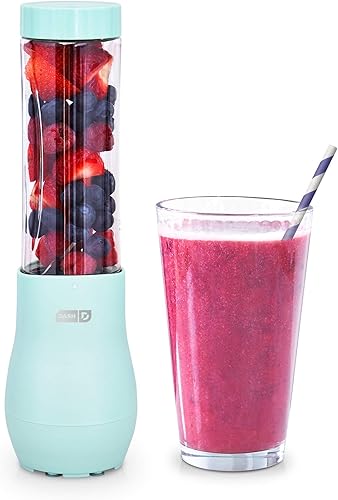
Personal blenders use cups that range from about 10 to 24 ounces, enough for one smoothie or protein shake. The DASH DMB100GBAQ06, for example, holds 10 oz and weighs just 1.3 lb, so it fits on a small counter or in a cabinet drawer. Countertop blenders carry 48 oz or more, which matters when you are blending for a family or batch-prepping soup. The tradeoff is physical footprint: a full-size blender can stand 16 to 18 inches tall and is harder to store.
Power and What You Can Blend
Wattage varies widely across both categories, so it is worth checking specs rather than assuming a countertop model is always more powerful. The NutriBullet N12-1001MK runs at 1200 W, which is more than enough to pulverize frozen fruit and fibrous greens. Many countertop blenders in the same price range run 700 to 1000 W. Where countertop models have a real advantage is blade exposure: a wide pitcher lets the blades pull ingredients down more evenly, which helps with thick batters or whole-food ingredients that need time to break down. Personal blenders at 150 W, like the DASH DMB100GBAQ06, work well for soft fruit and protein powder but will struggle with dense frozen blocks.
Cleanup and Daily Convenience
Personal blenders are nearly always faster to clean because you blend directly in the cup you drink from. Rinse the blade attachment, wipe the motor base, and you are done in about 30 seconds. Countertop pitchers require washing a jar, lid, and gasket, and the corners of a square jar can trap residue. If you make a smoothie every morning before leaving for work, that time difference adds up quickly. The Magic Bullet MBR-1701, with a 16 oz stainless steel cup rated 4.4 stars across 5,300 reviews, is a good example of how a compact personal blender turns daily cleanup into a non-issue.
Price and Value
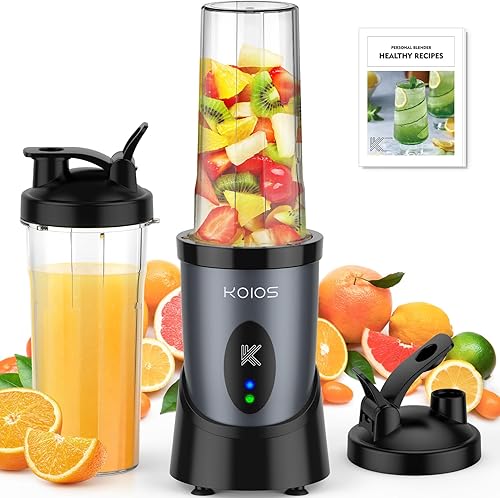
Entry-level personal blenders start around $20 to $30 and cover everyday smoothies reliably. The KOIOS personal blender at $29.99 earns a 4.4-star rating from nearly 4,000 buyers, with 900 units sold last month, which signals consistent satisfaction at a budget price. Mid-range personal blenders top out around $130, while countertop blenders span $40 for a basic model up to $500 or more for commercial-grade machines. Unless you regularly make soup, nut butter, or large-batch recipes, spending $200 or more on a countertop blender is hard to justify for solo use.
When a Countertop Blender Makes More Sense
A countertop blender earns its place when you cook for multiple people, blend hot soups directly in the jar, or work with ingredients that need sustained blending time. They also handle ice crushing more consistently because the blade-to-jar ratio keeps chunks circulating. If you make margaritas for a group, batch-blend baby food for the week, or need to puree cooked vegetables, a countertop model is the right tool. The larger motor housing also tends to run cooler under extended use, which matters for longer blend cycles.
Portability and Storage
Personal blenders are the clear choice if counter space is limited or if you travel. Several models weigh under 2 pounds, and the cup doubles as a to-go container with a lid. Countertop blenders require a dedicated counter zone and are impractical to move around. For college dorm rooms, small apartments, or offices with a shared kitchen, a personal blender is often the only realistic option. Even for people with full kitchens, many keep a personal blender for quick weekday blends and reserve the countertop model for weekend cooking.
Common mistakes to avoid
- Buying a countertop blender for single-serve use and then hand-washing a 64 oz jar every morning, which makes the habit harder to keep.
- Assuming a personal blender cannot handle frozen fruit because it is small. A 1000 W or 1200 W personal blender like the NutriBullet N12-1001MK handles frozen ingredients without trouble.
- Choosing a personal blender with too small a cup (10 oz) when your typical recipe calls for a cup of liquid plus two cups of fruit, which just does not fit.
- Overlooking blade and cup compatibility when buying replacement parts. Personal blender brands use proprietary threads, so cups and blades from different brands rarely interchange.
- Judging power by price alone. A $30 personal blender with 150 W will handle soft fruit fine, but if you regularly add ice or raw kale, you need to check the wattage, not just the price tag.
- Expecting a personal blender to work as a food processor. These machines are not designed for chopping solid vegetables or mixing dough, regardless of wattage.
Frequently asked questions
Can a personal blender replace a countertop blender for most people?
For most single-person or two-person households making smoothies, shakes, or sauces, yes. Personal blenders handle the daily workload well and are easier to clean and store. The main gap shows up with large batches, hot liquids, and very dense ingredients, where a countertop pitcher gives the blades more room to work.
Is a 150 W personal blender powerful enough for frozen smoothies?
It depends on what you add. A 150 W motor, like in the DASH DMB100GBAQ06, handles soft frozen fruit, yogurt, and protein powder without issue. Adding a full cup of solid ice or frozen banana chunks will slow it down and can wear out the motor faster over time. If frozen ingredients are a daily habit, look for 700 W or more.
Do personal blenders work for meal prep?
In limited ways, yes. They blend sauces, dressings, and single-serve soups (using pre-cooked, cooled ingredients) without trouble. They are not suited for batch work since the cups top out around 20 to 24 oz. For any recipe that needs more than one blender cup, a countertop model will save time.
What should I look for in a personal blender for the gym?
Prioritize a leakproof lid, a cup with a wide enough mouth to add ice and fruit easily, and a motor above 700 W if you use frozen ingredients. Weight matters too: lighter models around 1.3 to 2 lb are easier to keep on a desk or in a bag. The DASH DMB100GBAQ06 at 1.3 lb and 10 oz capacity is a practical choice for simple protein shake prep.
Are countertop blenders better for making nut butter?
Generally yes, because the wider jar keeps nuts circulating around the blades throughout the blend cycle. Personal blenders can attempt nut butter in very small amounts, but the narrow cup causes the mixture to climb the walls and stop blending before it reaches a smooth consistency. A countertop model with a tamper is the better tool for that use case.