How to Choose a Personal Blender
Choose a personal blender based on four things: motor wattage, cup capacity, blade quality, and how easy it is to clean. A blender in the 600W to 1200W range handles the widest variety of ingredients without stalling, while a cup in the 16 to 24 oz range works for most single-serve drinks. Beyond power, look at whether the cup seals well enough to take on the go, since that is the main reason most people buy a personal blender in the first place.


Motor Power: The Most Important Spec
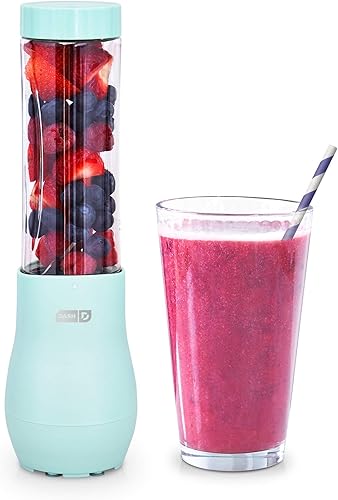
Wattage tells you how much work the motor can do before it slows down or overheats. Entry-level personal blenders like the DASH DMB100GBAQ06 run at 150W, which is enough for ripe bananas and fresh berries but will struggle with ice or dense frozen mango. Step up to the NutriBullet ZNB30100Z at 1000W and frozen ingredients blend smoothly without you needing to add extra liquid to thin things out. The NutriBullet N12-1001MK runs at 1200W and has 11,723 reviews with a 4.5-star rating, making it one of the most trusted high-power options under $115. As a general rule, 300W to 600W covers light daily use, and 900W or more covers anything including protein powder, kale, and frozen fruit regularly.
Cup Capacity and Portability
Personal blenders are built around single-serve cups that double as travel bottles. The DASH DMB100GBAQ06 holds 10 oz, which is compact for small smoothies and fits most car cup holders at 3 x 3 inches and 1.3 lb. The Magic Bullet MBPB50100AK and the MUELLERH0ME PB-2200 both offer 16 oz cups, which is the sweet spot for a standard smoothie with fruit, liquid, and extras. If you routinely make larger batches or want to fill a full 20 oz tumbler, look for cups marketed as 24 oz or larger. Check that the cup comes with a leak-proof lid and a spout or sip ring, not just a screw cap, if you plan to drink from it in the car.
Blade Material and Design
Virtually every personal blender on the market uses stainless steel blades, so material is a baseline you can count on. What matters more is the blade geometry and how it sits inside the cup. Some blades have two wings, some have four, and some have a cross-cut design intended to pull ingredients down toward the center. You generally cannot assess this from the listing alone, but reading the one and two-star reviews often surfaces complaints about ice not breaking or leafy greens getting stuck. A blade that unscrews from the base is easier to rinse by hand than one that is fixed and sealed. If deep cleaning is important to you, confirm the blade assembly is removable before buying.
Controls and Ease of Use
Personal blenders are mostly one-touch designs, which is by intent. You press down or twist the cup and the motor runs. Some models like the Ninja BC251SL use a digital touch panel, while the NutriBullet ZNB30100Z offers two speeds via push button. For most people a single-speed push-button is enough. If you want the option to pulse or vary speed, that narrows your choices and usually adds to the price. Avoid models with controls described only as remote or app-based unless portability without a cord is specifically what you need, since those rely on batteries and introduce charging as a variable.
Weight, Footprint, and Storage
A personal blender base is usually lighter and narrower than a countertop unit, but the range is still wide. The DASH DMB100GBAQ06 measures 3 x 3 x 10.5 inches and weighs 1.3 lb, small enough to slide into a kitchen drawer. The NutriBullet N12-1001MK is 5.26 x 4.8 x 14.4 inches and weighs 6.2 lb, which is more than compact but still far smaller than a full countertop blender. If counter space is limited or you plan to store the blender in a cabinet between uses, measure your shelf clearance before ordering. Height is the figure that most often catches buyers off guard when an appliance arrives.
Price and Value
Personal blenders range from under $20 to over $150. The MUELLERH0ME PB-2200 sells around $20 and has a 4.2-star rating across nearly 500 reviews, showing that budget options can work well for light use. The DASH DMB100GBAQ06 at $29.99 adds a 150W motor and a 10 oz stainless steel cup for a reliable entry point. At $75.87 the NutriBullet ZNB30100Z delivers 1000W and a 4.6-star rating from 4,800 reviewers, offering a clear upgrade for frozen ingredients without crossing into premium pricing. Spending more than $100 makes sense mainly if you want higher wattage, a larger cup, or features like multiple speeds, and you blend heavy ingredients every day.
Common mistakes to avoid
- Buying by price alone and ending up with a 150W motor that stalls on frozen fruit after a week.
- Ignoring cup capacity and ordering a 10 oz blender when you always make a 20 oz smoothie.
- Assuming all blenders are dishwasher-safe. Check the cup and blade assembly listings individually, since blade bases are often hand-wash only.
- Skipping the weight listing. A blender rated at a suspiciously low or high weight in the specs may have a data error, so cross-check the product page before buying.
- Overlooking voltage. A unit listed at 230V will not run correctly on a standard US 120V outlet without a converter.
- Buying a cordless or battery-powered blender without confirming charging cable type and battery life, since these factors determine real-world daily convenience.
Frequently asked questions
How many watts do I need in a personal blender?
For soft fruit and yogurt, 150W to 300W is enough. For frozen fruit, ice, or leafy greens on a regular basis, look for at least 600W. The NutriBullet ZNB30100Z at 1000W and the NutriBullet N12-1001MK at 1200W both handle dense frozen ingredients without requiring extra liquid to get the blade moving.
What is the best cup size for a personal blender?
A 16 oz cup covers a standard single-serve smoothie for most adults. If you prefer a larger drink or regularly add bulky greens before they compress, a 20 to 24 oz cup gives you more room. The DASH DMB100GBAQ06 at 10 oz is fine for small portions but tight for anything beyond a simple fruit smoothie.
Can I put a personal blender cup in the dishwasher?
Many cups are dishwasher-safe on the top rack, but blade assemblies usually are not. Check the product listing for your specific model. Washing the blade assembly by hand with a bottle brush immediately after use prevents residue buildup and extends the life of the gasket seal.
Is a personal blender good for protein shakes with powder?
Yes, most personal blenders handle protein powder well as long as you add the liquid first and the powder second. Wattage matters less here than blade design and cup shape. Models with a wider base and a four-blade assembly tend to incorporate powder without leaving dry clumps at the bottom.
How do I know if a personal blender will fit in my car cup holder?
Check the cup diameter in the product dimensions. A cup that is 3 to 3.5 inches in diameter fits the majority of standard car cup holders. The DASH DMB100GBAQ06 at 3 inches across is a reliable fit. Wider cups above 4 inches often do not seat properly. Contact hello@kitchenexplorers.com if you have questions about a specific model.