Why Is My Personal Blender Not Blending?
Most personal blender problems come down to a handful of fixable issues, from overloaded cups to dull blades and motor overheating.
A personal blender that refuses to blend, stalls mid-cycle, or leaves chunks behind is frustrating, especially when you are in a hurry. The good news is that most of these failures have straightforward causes. Understanding what goes wrong, and why, helps you fix the problem fast and avoid it in the future. This guide covers the most common culprits and what to do about each one.

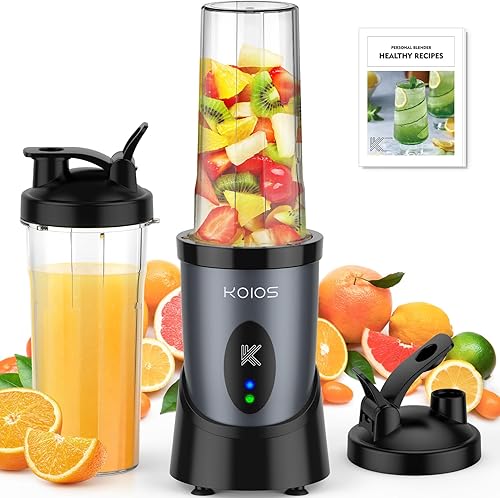

The Cup Is Overfilled or Packed Too Tight
Personal blenders are compact by design, and their motors have real limits. When the cup is filled past the max line, ingredients press directly against the blades and give them no room to move. Frozen fruit packed in solid has the same effect even if the fill level looks fine. The fix is simple: drop the amount by 20 to 25 percent, add liquid first so ingredients float toward the blades, and break up large frozen chunks before they go in the cup. A 10 oz cup like the DASH DMB100GBAQ06 fills up faster than it looks, so err on the side of less.
Not Enough Liquid
Blades need liquid to create the vortex that pulls ingredients down and keeps everything moving. Without enough liquid, the blender churns air, stalls, or just spins without making contact with solid ingredients. A good starting point is at least a quarter cup of liquid for every cup of solid ingredients. If you are making a thick smoothie with frozen berries or dense greens, go closer to half liquid before you start blending. You can always add more liquid in small amounts if the blend is not moving.
The Motor Has Overheated
Personal blender motors are small and generate heat quickly under load. Most models have a thermal cutoff that stops the motor before it can burn out. If your blender suddenly stops running and will not restart, overheating is the likely cause. Unplug it, remove the cup, and let the unit sit for 10 to 15 minutes before trying again. Running continuous blending cycles back to back, or blending very dense mixtures at full power for extended periods, pushes motors to their limits fastest. Models like the NutriBullet N12-1001MK at 1200W handle dense loads better than lower-wattage units, but every motor has a duty cycle.
The Blade Assembly Is Not Seated Correctly
Personal blenders use a twist-lock system to secure the blade base to the cup. If the blade assembly is not locked down fully, the blades will not spin at all, or the motor will run but deliver very little cutting action. Take the cup off, check that the rubber gasket is seated flat and not twisted, then reattach and twist firmly until you feel it click or stop turning. If the gasket is cracked or warped, it needs replacing before you blend again. Most brands sell replacement gaskets and blade assemblies separately.
The Blades Are Dull or Damaged
Stainless steel blades stay sharp for a long time, but they do dull with heavy use, and they can chip or bend if they hit a hard object like an ice cube that is too large or a cherry pit. Dull blades do not cut cleanly, so they push ingredients around instead of shredding them. If your blender runs fine but leaves fibrous greens or large chunks intact, blade wear is worth checking. Hold the blade assembly up to the light and look for visible nicks or a rounded edge. Replacement blade assemblies for popular models like the Magic Bullet MBR-1701 are widely available and cost a fraction of a new blender.
The Power Source or Connection Has a Problem
Before assuming anything is wrong with the motor, check the basics. Make sure the outlet is working by plugging something else into it. Inspect the power cord for any visible damage near the base. Some personal blenders, particularly cordless models, require a full charge before they will run at full speed, and a partly discharged battery will produce sluggish blending. If your model uses a detachable base or a charging connection, make sure that connection is clean and fully seated.
The Blender Needs a Reset
Some personal blenders, including several NutriBullet models, have a reset button on the bottom of the motor base. If the thermal cutoff tripped, pressing this button after the unit cools down restores normal operation. Check the user manual for your specific model, since the reset process varies. If the blender still will not start after cooling and resetting, the motor itself may have failed. At that point, compare the cost of a factory service or replacement unit, since compact personal blenders in the $30 to $75 price range are often more economical to replace than repair.
Frequently asked questions
Why does my personal blender run but not blend?
The most likely cause is that the blade assembly is not fully locked onto the cup, or the cup is overfilled and ingredients are blocking blade movement. Remove the cup, reseat the gasket, and reattach it firmly. If the cup was overfilled, reduce the contents by about a quarter and add more liquid before trying again.
Why does my blender stop after a few seconds?
A blender that stops after a few seconds is almost certainly overheating or hitting its thermal protection limit. This happens when the motor is working too hard against a dense or overpacked load. Unplug the blender, let it cool for 10 to 15 minutes, reduce the amount in the cup, and restart. Blending in shorter 20 to 30 second bursts helps manage heat buildup.
Can I fix a personal blender myself?
Many personal blender problems are user-fixable without any tools. Loose blade assemblies, worn gaskets, overfilled cups, and thermal trips are all resolved without opening the motor base. Blade replacements are also straightforward since the blade assembly unscrews like the cup. Opening the motor base itself voids most warranties and is only worth attempting if the unit is out of warranty and a repair manual is available.
How do I know if my blender motor is burned out?
A burned-out motor typically produces no movement and no sound when you activate the blender, or it makes a humming noise without the blades turning. A burning smell, visible discoloration on the base, or a tripped reset button that does not restore function after cooling are also signs of motor failure. If the unit is under warranty, contact the manufacturer before attempting any repair.
Does motor wattage affect how well a personal blender handles tough ingredients?
Yes, wattage is a practical indicator of what a personal blender can handle. A 1200W model like the NutriBullet N12-1001MK can process denser loads with less risk of stalling compared to a 150W or 200W entry-level unit. That said, wattage only matters if you are also giving the blades enough liquid and not overfilling the cup. A high-wattage blender with a packed cup and no liquid will still struggle.