Food Processor Uses Beyond Chopping
A food processor can handle dough, spreads, sliced vegetables, shredded cheese, and more, making it one of the most versatile appliances you can keep on the counter.
Most people pull out their food processor to chop onions and call it a day. That is a waste of a capable machine. A full-size food processor with a good motor can take on tasks that would otherwise require a stand mixer, a box grater, or a lot of knife work. Once you understand what the different blades and discs actually do, you start reaching for the machine far more often.

Making Pie Crust and Other Short Pastry Doughs
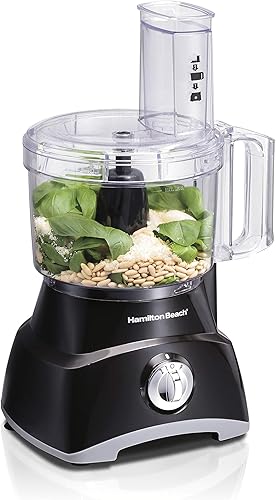
Cold butter has to stay cold when you make pie crust, and a food processor handles that better than your hands ever will. You pulse cold butter cut into cubes with flour until the mixture looks like coarse crumbs, then drizzle in ice water until the dough just comes together. The whole process takes under two minutes, and because the bowl is enclosed, the butter stays cold throughout. The same technique works for biscuit dough, shortbread, and crumble toppings. A machine with at least 450 watts makes this easy, and the Hamilton Beach 70740 (4.5 stars, over 18,000 ratings, $62.29) has a 64 oz bowl and a 450 W motor, which is plenty for a double pie crust. Stop as soon as the dough clumps or you will overdevelop the gluten and end up with a tough crust.
Grinding Nuts and Making Nut Butter
A food processor is the standard tool for homemade nut butter. You add roasted nuts, run the machine, and scrape down the sides every minute or two. After several minutes, the nuts release their natural oils and the mixture turns smooth. Peanuts and cashews take around 5 minutes. Almonds and hazelnuts take closer to 10 because they are drier. A pinch of salt is the only thing most people add. Adding oil is optional and speeds up the process. The key is patience: the mixture goes through a crumbly stage before it turns creamy, and stopping there is the most common mistake. A machine with a wide feed tube and a tight-fitting bowl lid helps keep the mess contained during the long run time.
Slicing and Shredding With Disc Attachments
The S-blade most people use for chopping is only one of several attachments that come with a full-size processor. Slicing discs let you process a whole potato, zucchini, or cucumber into uniform rounds in seconds. Shredding discs turn a block of cheddar into grated cheese faster than any box grater, and the cheese stays cold and dry rather than turning greasy from warm hands. The Cuisinart DFP-14BCNY (4.6 stars, over 22,000 ratings, $250.57) includes slicing and shredding discs and a 112 oz bowl that handles a large block of cheese without stopping to empty it. For weeknight meal prep, running a bag of carrots or a head of cabbage through the shredding disc in one batch saves real time compared to hand cutting.
Whipping Hummus, Spreads, and Dips
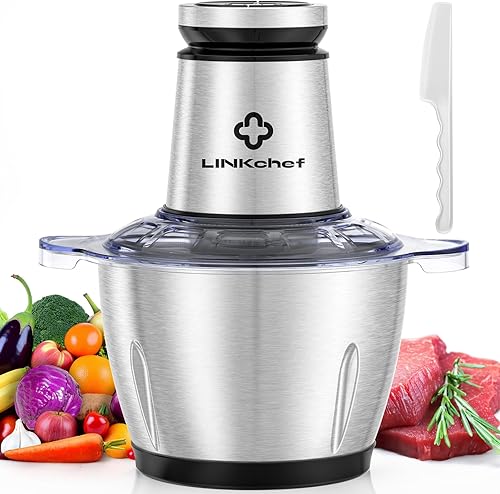
A food processor produces much smoother hummus than a blender because the wide bowl lets you scrape down the sides easily and control the texture. The standard approach is chickpeas, tahini, garlic, lemon juice, and olive oil, but the real secret to ultra-smooth hummus is running the machine for a full 3 to 4 minutes without stopping. The same technique works for white bean dip, baba ganoush, and roasted red pepper spread. These applications only need a few cups of capacity, so a compact processor works fine. The LINKChef FC7048 (4.6 stars, 4,600 ratings, $54.99) has a 64 oz bowl and a 600 W motor at a price that fits most budgets, and it handles dips, salsas, and small batch chopping without taking up much counter space.
Mixing Meatballs and Burger Patties
Combining ground meat with breadcrumbs, egg, garlic, and herbs by hand is tedious, and it warms the fat in the meat, which makes burgers and meatballs denser and greasier. A few short pulses in the food processor blend the ingredients evenly and keep everything cold. The key word is pulses: you want mixing, not processing into a paste. Five to eight pulses of one second each is usually enough. Keep the meat cold before it goes in the bowl, and do not run the machine continuously. This also works for fish cakes, falafel, and veggie burgers where you want the mixture evenly combined but still with some texture.
Pureeing Soups and Sauces
A food processor can puree cooked vegetables into soup, though it handles the job differently than a blender. You work in batches and fill the bowl no more than halfway with hot liquid to avoid leaks around the lid. The result is slightly chunkier than a blender puree, which some people prefer for roasted tomato or butternut squash soup. For smooth, silky results you are usually better off with an immersion blender, but if the food processor is what you have, it gets the job done. Cold sauces like chimichurri, pesto, and salsa verde come out better in a food processor than in a blender because you can pulse to a rough chop rather than pureeing everything into a uniform liquid.
Grating Parmesan and Hard Cheeses
Block Parmesan is cheaper per ounce than pre-grated, and a food processor with a fine shredding disc turns a wedge into a pile of grated cheese in about 30 seconds. The result is fluffier and less compact than shelf-stable pre-grated versions, and it melts better because there are no anti-caking agents. Cut the block into pieces that fit through the feed tube, run it through the disc, and store the extra in an airtight container in the refrigerator for up to a week. The same disc works for Pecorino Romano, aged Manchego, and dry Jack. Softer cheeses like mozzarella do better with the shredding disc when the cheese is straight from the refrigerator, or frozen for 20 minutes first so it does not clump.
Frequently asked questions
Can a food processor knead bread dough?
It can handle soft, low-gluten doughs like pizza dough in small batches, but it is not ideal for full loaves of bread. Most home food processors are not designed for the sustained load that stiff bread dough puts on the motor. Overworking the machine can trip its thermal reset or shorten the motor's life. For bread dough, a stand mixer with a dough hook is a better tool.
Is a food processor better than a blender for hummus?
For most people, yes. The wide, shallow bowl of a food processor makes it easy to scrape down the sides and control the texture as you go. A blender can produce very smooth hummus too, but the narrow jar makes scraping awkward and you often need to add more liquid to keep things moving. A food processor gives you more control over the final consistency.
How much bowl capacity do I actually need?
For a household of two to four people doing regular meal prep, a 10 to 12 cup bowl is a practical size. Smaller bowls under 7 cups are fine for dips and small tasks but run out of room quickly when shredding a block of cheese or prepping a full batch of vegetables. Larger bowls in the 14 cup range are helpful if you cook in big batches or entertain often.
Can I make pie crust in a small food processor?
You can make a single crust in a 7 cup or larger processor. A double crust for a standard 9-inch pie needs closer to 10 cups of capacity to mix properly without overflow. If your bowl is small, make each crust separately rather than crowding the bowl, which causes uneven mixing.
Why does my food processor leak liquid when I puree soup?
Hot liquid expands and creates steam pressure inside the bowl, which forces liquid out around the lid or at the bottom seal. Fill the bowl no more than halfway when working with hot liquids, and hold a folded kitchen towel over the lid while the machine runs. Processing in two or three batches takes a little longer but prevents a mess and keeps the seal in good condition.