Food Processor Blades and Discs Explained
Every food processor ships with at least a few attachments, and knowing which one to reach for makes the difference between great results and a frustrating mess.
Most food processors come with two or three attachments right out of the box, and many owners use only one of them. The others stay in the drawer because the manual is thin and the names are confusing. This guide walks through each common blade and disc, explains what it actually does to food, and tells you which tasks it handles well and which it does not. Once you understand the basic mechanics, choosing the right attachment takes about two seconds.

The S-Blade (Multipurpose or Chopping Blade)
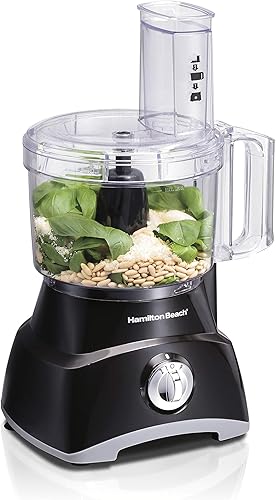
The S-blade, sometimes called the chopping blade or multipurpose blade, is the one attachment that comes with every food processor. It sits flat on the bottom of the bowl and spins fast, pulling food down from the sides and chopping or pureeing it in short bursts. Use it for chopping onions, garlic, and herbs, making hummus or salsa, grinding meat, mixing dough in machines that support it, and pureeing cooked vegetables into soups or sauces. Pulse control matters most with this blade because the difference between coarsely chopped onion and onion mush is often just one or two extra pulses. Most home-use food processors pair this blade with a bowl in the 12 to 14-cup range, which gives you enough room to process a full batch without overflow.
Slicing Discs
A slicing disc is a flat, round plate with one or more horizontal slots that sits near the top of the bowl on a stem. You feed food down through the feed tube and the spinning disc pushes it across the slot, producing uniform slices. The thickness of the slice depends on how high the cutting edge sits above the disc surface. Some machines include a single fixed-thickness slicing disc, while others ship with an adjustable disc that lets you set the thickness from about 1 mm to 7 mm or more. Slicing discs are ideal for cucumbers, zucchini, potatoes, cabbage, carrots, mushrooms, and firm cheeses. They work best with food that is roughly cylindrical or can be trimmed to fit the feed tube snugly, because loose pieces slide around and produce uneven cuts.
Shredding and Grating Discs
Shredding discs look similar to slicing discs but the cutting surface is a grid of small raised teeth rather than a straight slot. Fine shredding discs produce results similar to a box grater on the small holes side, which is useful for hard cheeses like Parmesan and for shredding carrots finely into salads or baked goods. Medium and coarse shredding discs are better for mozzarella, cheddar, zucchini, and cabbage for coleslaw. The key difference from slicing is that shredding discs tear the food into strands rather than cutting it into coins, so the texture is looser and more irregular. Chilling firm cheese for 20 to 30 minutes before shredding helps it hold its shape against the teeth and reduces clumping in the bowl.
Dough Blade
Not every food processor includes a dough blade, but mid-range and higher-end machines often do. It is shorter and blunter than the S-blade, usually made of plastic, and it works by pushing and folding dough rather than chopping it. This gentler action develops gluten without overworking the dough the way a high-speed metal S-blade can. Use it for pizza dough, bread dough, pie crust, and pasta dough. One practical note: the bowl capacity listed on the machine refers to liquid volume, and dough takes up more space than that number suggests, so a 14-cup bowl typically handles about 3 cups of flour comfortably. Machines rated at 720 W or higher tend to handle stiff doughs more reliably than lower-wattage models.
Julienne and French Fry Discs
Julienne discs are specialty attachments that cut food into thin matchstick strips. They look like a standard slicing disc but with a raised comb of teeth that breaks each slice into individual strips as it passes through. The result is consistent julienned carrots, beets, or zucchini in seconds, which would take several minutes and steady knife skills by hand. French fry discs work on the same principle but cut thicker strips, typically around 6 mm to 8 mm square, designed for potato wedges headed to the oven or fryer. These discs are sold separately for most consumer machines, so check compatibility by model number before ordering.
Whisk or Egg Whip Attachment
Some food processors include a whisk attachment, a wire loop or set of tines that mounts on the central stem. It is designed for whipping cream, beating eggs, and making light batters. It will not whip as fast or produce as much volume as a stand mixer fitted with a balloon whisk, but for small amounts, say one to two cups of heavy cream, it gets the job done. The bowl must be clean and completely dry before whipping cream or egg whites, because any fat residue prevents the foam from forming properly. Processors that do not include this attachment are often better served by a separate hand mixer for these tasks.
How to Choose and Store Your Attachments
Most home cooks need only three things from their food processor: the S-blade for chopping and pureeing, a slicing disc for vegetables, and a shredding disc for cheese and coleslaw. Everything beyond that depends on how often you cook specific dishes. When shopping, look for machines that include at least these three attachments in the base price, because buying discs separately can add $20 to $60 per piece. Storage is a real problem with disc-heavy machines. Discs have sharp edges on multiple sides and they stack poorly. A dedicated storage case or a small plastic bin in a drawer prevents the discs from sliding around and protects both the cutting edges and your fingers. Dry all discs fully before storing, because trapped moisture under the hub collar can cause corrosion over time even on stainless steel.
Frequently asked questions
Can I use the S-blade instead of a slicing disc?
Not for sliced vegetables. The S-blade chops by spinning rapidly near the bottom of the bowl, which produces irregular pieces rather than uniform slices. For anything where consistent thickness matters, like scalloped potatoes or cucumber salads, a slicing disc is the right tool. The S-blade is fine for rough chopping where uniformity does not matter.
Why does my food turn to mush instead of staying chopped?
Overfilling or running the motor continuously without pulsing are the most common causes. The S-blade works by recirculating food, so anything at the bottom keeps getting hit while the top barely moves. Process in smaller batches and use the pulse button in short bursts, checking the texture after every few pulses. Starting with cold or room-temperature food also helps, since warm cooked vegetables break down faster.
Are food processor blades and discs dishwasher safe?
Many are listed as dishwasher safe, but the top rack is strongly preferred for plastic components and discs with plastic hubs. Repeated high-heat dishwasher cycles can dull stainless steel cutting edges faster than hand washing. Checking your specific machine's manual is the safest approach, since some manufacturers void the warranty on blades washed on the bottom rack.
What wattage do I need for a food processor that handles dough?
Machines rated at 600 W or higher handle most bread and pizza dough without straining the motor noticeably. Models around 700 W to 720 W are a common sweet spot for home bakers. Very stiff doughs, like bagel or rye bread dough, can stress motors below 500 W if you process a full batch, so watch for the motor slowing or the smell of heat if you push past the recommended flour capacity.
Do all food processor discs fit all machines?
No. Discs mount on a central stem and the stem diameter, height, and locking mechanism vary by brand and sometimes by product line within the same brand. Cuisinart, Hamilton Beach, and other major brands each use proprietary fittings, and even within one brand a disc from an older model may not seat correctly on a newer one. Always match discs to your specific model number rather than just the brand name.