Can You Crush Ice in a Personal Blender?
Some personal blenders handle ice just fine, but the wrong one will stall, strip its blades, or void its warranty.
Personal blenders are built for quick, single-serve jobs, and a lot of people want to use them for frozen drinks. The honest answer is: it depends entirely on the motor and blade design. A 150-watt machine was not built to pulverize a cup of ice cubes, while a 1000-watt or 1200-watt unit can handle it routinely. Knowing where your blender falls on that spectrum saves you from a burned motor and a watery smoothie.


Why Wattage Is the Starting Point
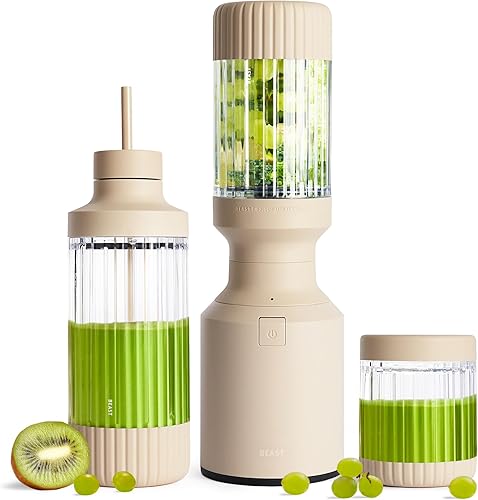
Crushing ice requires the blade to generate enough torque to shatter frozen water, which is a lot harder than blending soft fruit. Personal blenders in the 150-watt to 300-watt range are designed for soft frozen ingredients like bananas or pre-made smoothie packs, not whole ice cubes. Units at 800 watts and above have the motor headroom to push through ice without stalling. The NutriBullet N12-1001MK runs at 1200 watts and the BEAST B85MH runs at 850 watts, two examples where the power spec is clearly in ice-crushing territory. Below 500 watts, expect the blender to struggle, produce chunky results, or simply stop mid-blend.
Blade Design Matters as Much as Power
Wattage alone does not tell the whole story. The blade angle and number of cutting edges determine how efficiently a motor's power translates to actual ice breakup. Most personal blenders use a four-point or six-point stainless steel blade that is angled to pull ingredients down toward the cutting zone. A flat or shallow blade will push ice around rather than catch it. For ice work, look for blades that are described as extractor-style, meaning they are designed to pulverize dense material rather than just chop. Stainless steel blades are standard across the category and are fine for ice, as long as the blade attachment is locked tightly before blending.
Crushed Ice vs. Ice Cubes: an Important Distinction
There is a meaningful difference between blending crushed ice or small ice chips and blending full-size cubes. Crushed ice has more surface area and less structural integrity, so even a mid-range personal blender can incorporate it into a smoothie without much strain. Full 1-inch ice cubes are a different challenge. If your blender manual says it can handle ice, that often refers to crushed or small ice pieces. If you want to blend whole cubes regularly, you need a model rated for it specifically. When in doubt, run the ice through a bag and a rolling pin first to break it up before adding it to the cup.
Liquid Ratio and Load Order
Even a powerful blender works better with the right liquid-to-ice ratio. A cup of ice cubes with no liquid at all creates an air pocket around the blade, causing it to spin without making contact. A good starting ratio is roughly equal parts liquid and ice by volume, with liquids added to the cup first. Adding a banana, yogurt, or protein powder alongside the ice also helps by filling in gaps and giving the blade something soft to grip between ice contacts. This technique reduces strain on the motor and produces a smoother final texture.
Warning Signs That Your Blender Is Struggling
A blender that is underpowered for ice will telegraph the problem. The motor will sound strained or high-pitched, the unit may vibrate more than normal, and the blend will stop moving within a few seconds. If the blender cuts out and will not restart for several minutes, it has triggered its thermal overload protection, a built-in safety that shuts the motor off when it overheats. Repeated overloads shorten motor life significantly. If you notice these signs regularly, the machine is not rated for ice work and pushing through it will shorten how long it lasts.
What Your Warranty Actually Covers
Many personal blender warranties explicitly exclude damage caused by blending ice when the machine is not rated for it. Before you rely on the warranty for peace of mind, read the manual's approved use list. Higher-wattage personal blenders like the NutriBullet N12-1001MK (1200 W, rated 4.5 stars across more than 11,700 reviews) are sold specifically for frozen blending, which means the manufacturer has engineered and warranted the machine for that use. Budget blenders at 150 watts often say nothing about ice on the box, which is a signal that the use is not supported.
Practical Alternatives When Your Blender Cannot Crush Ice
If your current personal blender is not up to ice crushing, you have a few options that do not require buying a new machine. Pre-crushed ice from a freezer dispenser blends far more easily than cubes. Frozen fruit, particularly frozen berries or mango chunks, can replace ice entirely and add flavor and nutrition at the same time. Chilled water or coconut water adds cold without the structural challenge of ice. These swaps let almost any personal blender produce a cold, thick drink without asking more than the motor can deliver.
Frequently asked questions
Can a NutriBullet crush ice?
Higher-end NutriBullet personal blenders can handle ice. The NutriBullet N12-1001MK runs at 1200 watts and carries a 4.5-star rating from more than 11,700 reviewers, making it a well-documented choice for frozen blending. The original entry-level NutriBullet models run at lower wattages and are better suited to soft frozen ingredients than to whole ice cubes.
What happens if you put ice in a low-wattage personal blender?
A low-wattage blender will typically stall, produce large unblended ice chunks, or overheat and trigger its thermal shutoff. Repeated overheating shortens motor life and may void the warranty. If the motor sounds strained or the blend stops moving, turn the unit off and let it cool before attempting again.
Do I need a special blade to crush ice in a personal blender?
You do not need a separate blade, but the blade that came with the unit needs to be designed for dense, hard ingredients. Extractor-style blades with multiple angled cutting edges work best. Stainless steel construction is standard across most personal blenders and is durable enough for ice as long as the motor is adequate.
Is frozen fruit better than ice for personal blenders?
For low-wattage machines, yes. Frozen fruit is softer than ice and introduces less mechanical stress on the motor while still producing a cold, thick drink. It also adds flavor, fiber, and nutrients that plain ice cannot provide. For powerful blenders rated for ice, either option works well.
How much liquid should I add when blending ice in a personal blender?
A roughly equal volume of liquid to ice is a reliable starting point. Too little liquid leaves air gaps around the blade, causing it to spin without grabbing the ice. Too much liquid results in a thin, watery blend. Start with the liquid, add any soft ingredients, and put ice in last.