Can a Food Processor Make Dough?
A food processor can mix and knead most doughs in under two minutes, but the technique and motor power matter.
A food processor handles dough faster than hand kneading and with less mess than a stand mixer. The spinning blade works flour, fat, and liquid into a cohesive mass in well under two minutes, which is actually an advantage because it limits gluten development before the dough rests. The catch is that not every food processor has enough motor muscle for heavy bread doughs, and going too long in the bowl can overheat the dough and tighten the gluten to a rubbery texture. Once you understand the limits, a food processor becomes one of the most convenient tools in the kitchen for pastry, pizza, and quick bread doughs.

Which Doughs Work Best
Pie crust and pastry dough are the strongest use case for a food processor. The blade cuts cold butter into flour in a matter of seconds, producing the kind of pea-sized crumbs that make flaky layers, something that is difficult to replicate by hand once the kitchen is warm. Pizza dough and focaccia also come together cleanly because their hydration level is forgiving and the processing time is short. Pasta dough, shortcrust, and scone dough all land in the reliable column as well. Enriched doughs like brioche, with their eggs and high butter content, are trickier and tend to stick to the bowl walls in ways that make even mixing harder.
Which Doughs to Avoid
Dense artisan bread doughs with high hydration, like ciabatta or sourdough boules, put real stress on a home food processor motor. These doughs are thick enough to stall machines under 500 watts and can cause the motor to overheat if run for more than 60 seconds at a stretch. Very sticky doughs, such as cinnamon roll dough loaded with butter and eggs, tend to climb the blade shaft and process unevenly. Gluten-free doughs are variable, some work fine and some turn gummy. For any dough that needs more than 90 seconds of kneading, a stand mixer or hand kneading gives you more control.
Motor Power and Bowl Size
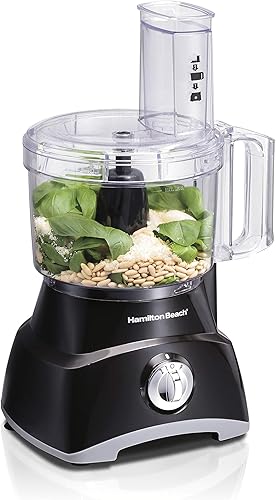
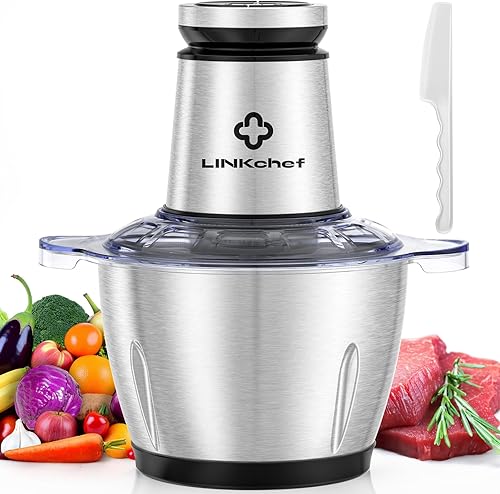
For pastry and pizza dough, 450 to 600 watts is sufficient for most home batches. The Hamilton Beach 70740, rated at 450 W with a 64 oz bowl, handles a double batch of pie crust without straining. The Cuisinart DFP-14BCNY runs at 720 W with a 112 oz bowl, which gives it enough headroom for a full pound of pizza dough. The LINKChef FC7048 sits in the middle at 600 W and a 64 oz bowl, a practical size for single pie crusts or one pizza. If you plan to make bread dough regularly, aim for at least 600 watts and a bowl over 60 oz, because a small bowl forces you to split batches and double your effort.
Step-by-Step: Pie Crust in a Food Processor
Start with cold ingredients. Measure the flour and salt into the bowl and pulse three or four times to combine. Cut very cold butter into half-inch cubes and scatter them over the flour, then pulse in short bursts, about 10 pulses of one second each, until the mixture looks like coarse crumbs with a few larger butter pieces still visible. Drizzle ice water through the feed tube one tablespoon at a time, pulsing twice after each addition. Stop adding water when the dough just begins to clump when pressed between your fingers. Turn it out immediately, press it into a disk, and refrigerate for at least 30 minutes before rolling. The whole process in the food processor takes about 45 seconds of actual run time.
Step-by-Step: Pizza Dough in a Food Processor
Combine the flour, salt, and instant yeast in the bowl and pulse once to mix. With the machine running on low, pour the water and olive oil through the feed tube in a steady stream. Once all the liquid is in, let the processor run for about 30 to 45 seconds until the dough forms a rough ball and pulls away from the sides. The dough may feel slightly tacky, which is normal. Transfer it to a lightly oiled bowl, cover, and let it rise at room temperature for one to two hours. Because the food processor develops gluten quickly, the dough benefits from the full rise time before shaping.
Avoiding the Two Biggest Mistakes
Overprocessing is the most common error. Every second past the point where the dough comes together adds heat and tightens gluten, which makes pie crust tough and pizza dough hard to stretch. Watch the bowl closely and stop the machine as soon as the mass coheres, not after. The second mistake is using warm ingredients. Food processors generate friction heat, so starting with room-temperature butter or tepid water pushes the dough temperature higher than ideal, especially for pastry. For pie crust, some bakers freeze the butter and grate it before adding it to the bowl.
When a Food Processor Makes More Sense Than a Stand Mixer
For pastry doughs where overworking is a real risk, the food processor wins because the short burst method is easier to control than a mixer running on low speed for several minutes. Cleanup is also simpler, just the bowl, blade, and lid rather than a dough hook and the full mixer body. If you make pie crust once a month or pizza once a week and you already own a food processor, there is no practical reason to add a stand mixer just for dough. The food processor earns its spot for anyone who wants consistent results with a small footprint on the counter.
Frequently asked questions
Can I make bread dough in a food processor?
Simple lean bread doughs, like a basic white sandwich loaf, can be made in a food processor with a motor of at least 600 watts. The limitation is time and bowl size. Run the processor for no more than 60 seconds at a stretch and let it rest before a second pass if the dough needs more work. Dense, wet doughs like sourdough are better handled by a stand mixer or hand kneading.
Why does my pie crust come out tough when I use a food processor?
Tough pie crust from a food processor is almost always caused by overprocessing. Once the dough forms small clumps that hold together when pinched, it is done, even if it does not look like a smooth ball. Adding too much water can also tighten the crust. Use ice water and add it one tablespoon at a time, stopping before the dough fully comes together in the bowl.
How big does my food processor need to be for dough?
A bowl of at least 48 oz, or about 6 cups, handles a single pie crust or enough pizza dough for one 12-inch pie. For a double-crust pie or two pizzas in one batch, aim for 64 oz or larger. Going too small means the dough rides up past the blade and processes unevenly, which forces you to stop and redistribute it by hand.
Can I make cookie dough in a food processor?
Drop cookie dough, like chocolate chip, works in a food processor but requires care. Overprocessing incorporates too much air and overdevelops gluten from any flour in the recipe, which can make cookies dense and chewy in the wrong way. Mix just until the ingredients come together. Shortbread, which has no eggs and benefits from minimal mixing, is actually a very good candidate for the food processor.
Does the dough blade make a difference?
Some food processors include a plastic dough blade in addition to the standard stainless steel S-blade. The plastic blade is blunter and designed to fold dough rather than cut it, which reduces the risk of overworking. It works well for yeast doughs. For pastry, the standard metal blade is better because it cuts cold fat into the flour more cleanly.