Best Single-Serve Smoothie Ideas for Your Personal Blender
Personal blenders are at their best when you need one cup fast, and these smoothie ideas cover breakfast, post-workout fuel, and everyday snacking.
A personal blender earns its counter space when you have a short rotation of smoothies you make on autopilot. The recipes that work best in compact machines share a few things in common: enough liquid to keep the blades moving, frozen fruit instead of raw ice whenever possible, and ingredients layered in the right order. Once you nail the basic format, you can swap flavors without thinking. The ideas below cover the most useful categories, from quick weekday breakfasts to higher-protein shakes, with notes on what makes each one blend cleanly.


Classic Banana Berry Smoothie
This combination works because frozen banana does two jobs at once. It adds natural sweetness that means you do not need added sugar, and it thickens the drink so the result has body rather than the watery consistency of blended juice. One frozen banana, half a cup of frozen mixed berries, and three quarters of a cup of milk or oat milk covers a standard 12 to 16 oz personal blender cup. The berries bring tartness and color, and the banana rounds it out. Blend for 30 to 45 seconds. If the result is too thick to flow easily, add another two tablespoons of liquid and blend for five more seconds.
Peanut Butter Protein Shake
A scoop of protein powder, one tablespoon of peanut butter, half a frozen banana, and a cup of milk blends into a filling shake that holds you through a long morning. Layering order matters here: put the milk in first, then the peanut butter, then the banana, and the dry protein powder on top. This keeps the powder from clumping against the bottom before the blades reach it. The NutriBullet N12-1001MK runs at 1200 W and holds a 4.5-star rating from more than 11,700 reviewers at around $111. A machine at that power level moves nut butter through the cup cleanly without leaving clumps or a greasy streak at the bottom.
Simple Green Smoothie for Beginners
The fastest way to ruin a green smoothie is to add too many greens relative to sweet fruit. A working ratio for beginners: one cup of baby spinach, one frozen banana, half a cup of frozen pineapple, and three quarters of a cup of coconut water. Spinach breaks down more easily than kale and has a milder flavor, which makes it the right starting green for a compact machine. The frozen pineapple adds brightness and covers any vegetal taste. Blend for a full 45 seconds to make sure no leaf pieces remain. Once you are comfortable with this base, you can swap spinach for kale or add half an avocado for more fat and creaminess.
Tropical Mango and Coconut Smoothie
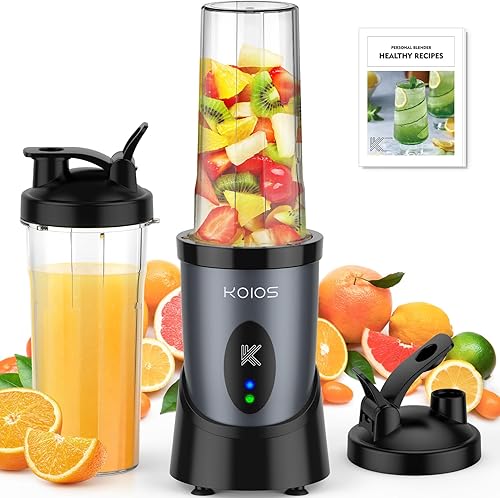
Frozen mango, coconut milk, and a small squeeze of lime juice produce a smoothie that tastes richer than its ingredient list suggests. Use three quarters of a cup of frozen mango and half a cup of coconut milk, then top off with water to reach your target volume. Frozen mango is softer than frozen berries and breaks down quickly, so this recipe is accessible even for personal blenders on the lower end of the wattage range. The KOIOS personal blender carries a 4.4-star rating from nearly 4,000 reviewers at $29.99, with 900 units bought last month, making it one of the more consistent sellers in the category for everyday recipes like this one.
Budget-Friendly Smoothie With Pantry Staples
Smoothies do not require expensive ingredients. A bag of frozen mixed fruit from any grocery store, one frozen banana, and water or regular milk is a complete breakfast in under a minute. Frozen fruit costs less per ounce than fresh and performs better in compact blenders because the cold temperature helps the motor run cooler during a short blend cycle. The Elite Gourmet EPB-1800A holds a 4.0-star rating from 3,600 reviewers at around $25 and handles soft frozen fruit reliably. Avoid adding large ice cubes to an entry-level machine since cubed ice places more torque on the motor than frozen fruit does, and an underpowered blender will stall before the ice breaks down.
Filling Oat and Nut Butter Smoothie
If you want a smoothie that replaces a full meal, add two tablespoons of rolled oats, one frozen banana, one tablespoon of almond or peanut butter, and fill to the max line with milk. Rolled oats add slow-digesting carbohydrates and fiber that carry you further than a fruit-only blend. Blend the oats with just the liquid for 15 seconds first, then add the banana and nut butter and blend again. This two-step approach keeps the oats from leaving a grainy texture. The finished smoothie comes out thick enough that a wide straw or a spoon works better than a standard straw, and it runs roughly 400 to 500 calories depending on milk type.
Tips for Getting Better Results in a Personal Blender
Always add liquid to the cup before any solid ingredient. This pulls liquid down through the blades first and prevents the motor from running dry at startup. Break up frozen fruit that has clumped in the bag before adding it since a large frozen mass spins in place rather than circulating. If the blender stalls, stop it, pull the cup off the base, stir with a long spoon, and restart rather than holding the button down. Never fill past the max fill line because overfilling forces ingredients up into the blade collar and can cause leaking. After drinking, add warm water and a drop of dish soap, blend for 10 seconds, and rinse. That handles residue before it dries onto the walls.
Frequently asked questions
Can I use fresh fruit instead of frozen in a personal blender?
Yes, fresh fruit works fine. The trade-off is that the smoothie will be less cold and less thick unless you add ice. If you use ice, add it in small pieces rather than whole cubes since compact motors struggle with large chunks. Starting with frozen fruit is easier and produces more consistent results without extra steps.
How much liquid do I need for a single-serve smoothie?
A good starting point is half a cup to one cup of liquid for a 12 to 16 oz serving. The right amount depends on how many dense ingredients you use. Recipes with nut butter or banana need more liquid, while fruit-only blends need less. Start at the lower end and add more if the blender stalls or the result is too thick to pour.
Why does my personal blender leave chunks in the smoothie?
The most common cause is too many solids relative to liquid, which prevents ingredients from circulating past the blades. A second cause is frozen fruit added as a large clump instead of loose pieces. Add more liquid, make sure frozen ingredients are broken apart, and run the blender for a full 30 to 45 seconds rather than stopping early.
Is it safe to blend protein powder in a personal blender?
Yes. Add liquid and fruit first, then put the protein powder on top so it does not pack around the blades before the blend starts. Most personal blenders handle one to two scoops without issue. If the shake foams heavily, let it sit for 30 seconds after blending before drinking so the foam settles.
How long does a blended smoothie stay fresh in the fridge?
Up to 24 hours in a sealed container. The color may darken slightly, especially with spinach or banana, but the flavor and nutrition hold well. Some separation is normal, so shake or stir before drinking. Avoid storing a smoothie in the blender cup with the blade assembly still attached since the seal is not airtight.